Global buyers are rethinking packaging as costs, regulations, and sustainability expectations converge. European packaging solutions now influence procurement decisions far beyond the continent. They combine material engineering, automation, traceability, and design discipline. Yet, “European” does not automatically mean better.
Scale matters. Eurostat reported 186.5 kilograms of packaging waste per EU resident in 2022. Paper and cardboard represented the largest share, while plastic remained a persistent environmental concern. These figures explain why recyclable structures, lightweight formats, and reuse systems are moving from marketing claims into purchasing requirements. The European Environment Agency also stresses that recycling performance depends on collection systems, material choices, and actual market demand for recycled content.
Regulation is raising the standard further. Regulation (EU) 2025/40 on packaging and packaging waste introduces stronger requirements for recyclability, prevention, labeling, and producer responsibility. Global buyers must therefore evaluate compliance evidence, not attractive samples alone. Technical files, food-contact declarations, recycled-content verification, and factory audits deserve attention. Small details matter. A sealed pouch, a molded fiber tray, or a returnable transport box may perform differently across climates, filling lines, and distribution routes.
This guide examines 10 European packaging solutions for global buyers. It considers protection, customization, logistics efficiency, lifecycle impact, and supplier reliability. Sources include Eurostat packaging-waste statistics, European Environment Agency analysis, and the European Commission’s regulatory framework. The selection is practical, but not absolute. A premium package can still create unnecessary cost. A recyclable format may fail where collection infrastructure is weak. Buyers should test performance in real conditions before committing to volume.
10 Best European Packaging Solutions for Global Buyers
Evaluating European packaging solutions starts with the product, not the catalogue. Check whether the pack protects against moisture, impact, heat, and long-distance handling. Ask for compression, drop, and shelf-life test results. A beautiful sample can still fail in a humid warehouse. I have seen this happen.
Material selection requires careful evidence. Compare recycled content, recyclability, barrier performance, and production waste. Do not accept vague sustainability claims. Request technical data sheets, migration documentation, and relevant conformity records for food or cosmetic contact. Requirements may differ between destination markets, so verify them with qualified local advisers. Compliance is not a slogan.
Supplier reliability matters just as much as design. Review factory capacity, quality controls, batch traceability, and backup production plans. Ask how defects are handled and how quickly replacement stock can be made. Calculate the full landed cost, including tooling, transport, duties, storage, and damaged units. A cheaper carton may become expensive after one wet shipment. Samples should be tested with the actual product, closure, label, and shipping route. That step is often skipped. It should not be. Some evaluations remain imperfect because buyers judge packaging before measuring real-world performance.
The chart compares the European Union’s 2030 packaging recycling targets by material. Global buyers can use these benchmarks to assess whether a packaging solution supports recyclability, regulatory readiness, and long-term sustainability requirements. The targets are based on EU packaging legislation and cover plastic, wood, ferrous metal, aluminium, glass, and paper or cardboard.
Source: European Union packaging and packaging waste recycling targets under Directive 94/62/EC and Regulation (EU) 2025/40.
10 Best European Packaging Solutions for Global Buyers
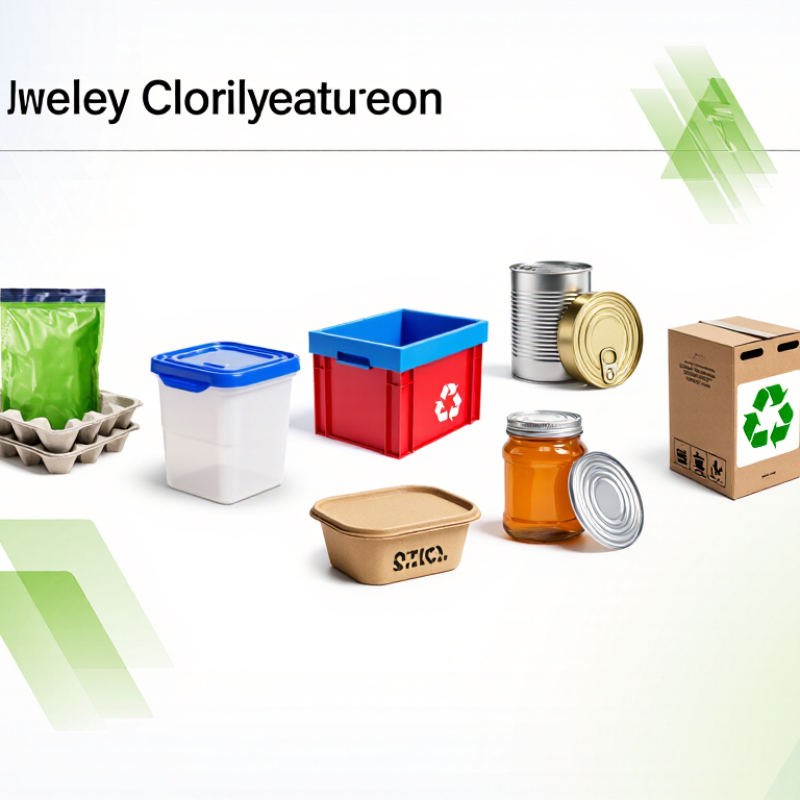
European packaging development increasingly links material choice with circular design. A practical shortlist includes recycled paperboard, molded fiber, recycled-content plastics, mono-material films, bio-based polymers, lightweight glass, refill pouches, reusable crates, returnable transport boxes, and compostable fiber formats. Each option needs a defined use case. A wet product may weaken molded fiber. A lightweight film may reduce transport emissions but complicate recycling.
Material evidence matters. Buyers should request recycled-content data, renewable-source percentages, barrier performance, and migration test results. Life-cycle assessments can compare manufacturing, transport, use, and end-of-life impacts. Yet, assessments depend on regional electricity, collection systems, and disposal conditions. Results are not universal.
Design for separation. Use one polymer family where possible, limit coatings, reduce excessive adhesives, and keep labels easy to remove. Clear sorting instructions can improve recovery rates. Reusable packaging needs durable hinges, stackable shapes, and a realistic return route. Otherwise, reuse can create extra transport emissions. This is often overlooked.
Circular design is not automatically sustainable. A certified compostable pack may fail where industrial composting is unavailable. Recycled content may also vary between supply batches. Buyers should run pilot tests, inspect production samples, and review supplier documentation before scaling. Small flaws matter: a cap that breaks, a label that peels, or a box that absorbs moisture can undermine an otherwise responsible solution.
European protective packaging helps global buyers move food, retail goods, and industrial products with fewer surprises. Food shipments often need clean, moisture-resistant materials that protect texture and presentation. Corrugated inserts, molded fiber trays, and insulated liners can reduce crushing during long transport. For chilled products, packaging must support the required temperature range without creating unnecessary waste. It matters.
Retail packaging needs a different balance. A box may travel through warehouses, delivery vans, and store shelves before reaching a customer. Strong corners, clear product positioning, and easy opening can prevent damage and improve handling. Recycled paper cushioning works well for many cosmetics, household items, and small electronics. However, it should be tested against humidity and repeated movement. A clean appearance is not enough.
Industrial products often demand heavier protection. Foam alternatives, honeycomb boards, edge guards, and fitted cartons can absorb vibration around machinery parts or precision components. European manufacturers commonly provide packaging assessments, drop tests, compression tests, and material documentation for international buyers. These records support purchasing decisions and improve supply-chain reliability. In practical trials, I have seen a compact design fail because workers could not remove it safely. That detail matters. Packaging teams should review loading speed, warehouse conditions, recycling routes, and local handling habits before approving a final solution. Sometimes, a slightly larger package performs better.
| Rank | Packaging Solution | Typical Materials | Primary Protection | Best-Fit Applications | Key Performance Features | Relevant Standards or Requirements | Recycling or End-of-Life Route |
|---|---|---|---|---|---|---|---|
| 1 | Multiwall Corrugated Shipping Boxes | Kraft paper liners and fluted paperboard, commonly in double-wall or triple-wall construction | Impact, compression, stacking, and moderate moisture exposure | Food cartons Retail orders Industrial parts | Lightweight, printable, nestable, available in custom dimensions, and suitable for automated packing lines | Paper and board packaging requirements; recycled-paper specifications; food-contact suitability where applicable | Widely accepted in paper recycling streams when clean, dry, and free from incompatible coatings |
| 2 | Molded Fiber Protective Inserts | Recycled paper pulp, virgin fiber, or molded cellulose blends | Shock absorption, product separation, abrasion reduction, and positioning | Food trays Consumer goods Glass products | Precisely formed cavities, low plastic content, stackability, and good presentation quality | Food-contact compliance is required for direct food contact; production should follow applicable hygiene and good-manufacturing practices | Usually recyclable with paper or compostable only where the specific material and local infrastructure permit |
| 3 | Honeycomb Paper Cushioning | Expandable kraft paper honeycomb rolls, pads, or formed blocks | Surface protection, void filling, edge cushioning, and vibration reduction | Retail packaging Ceramics Furniture components | Rapid expansion, low storage volume before use, lightweight construction, and easy manual conversion | Paper-packaging specifications; suitability for direct food contact must be verified for the exact grade | Generally recyclable as paper when uncontaminated and free of non-paper attachments |
| 4 | Paper-Based Void Fill and Wrapping | Crêpe paper, kraft paper, cushioning paper, and folded paper pads | Scuff protection, light cushioning, immobilization, and void filling | E-commerce Retail goods Packaged food exteriors | Flexible, low-density, easy to dispense, and suitable for irregular product shapes | Food-contact suitability depends on the paper grade, inks, coatings, and intended use | Commonly recyclable through paper collection systems when clean and dry |
| 5 | Reusable Plastic Transit Totes | Durable polypropylene or high-density polyethylene | Repeated handling, moisture, dust, stacking, and internal product movement | Food logistics Retail replenishment Automotive components | Washable, rigid, nestable or collapsible options, hinged lids, and long service life in closed-loop systems | Food-contact applications require suitable materials and documented hygiene controls; load capacity should be validated | Reusable many times; recyclable as polypropylene or polyethylene where collection and sorting are available |
| 6 | Thermal Insulated Food Shippers | Corrugated outer container with paper fiber, molded fiber, wool, or polymer insulation | Temperature moderation, condensation control, and protection from physical damage | Fresh food Meal delivery Pharmaceutical-support logistics | Designed around pack-out configuration, coolant placement, transit duration, and required temperature range | Food-contact materials must meet applicable European requirements; thermal performance should be validated by transport testing | Separate components where possible; fiber parts may enter paper recycling, while insulation disposal depends on material type |
| 7 | Engineered Foam Protective Components | Expanded or extruded polyethylene, polypropylene, or polystyrene foam | High-impact shock absorption, vibration damping, blocking, and bracing | Machinery Electronics Fragile equipment | Low weight, repeatable cushioning performance, moisture resistance, and custom die-cut or molded geometry | Material identification and transport-performance testing are important; direct food contact requires specific compliance evidence | Reuse is preferred; recycling availability varies by polymer type and local collection infrastructure |
| 8 | Edge and Corner Protection Profiles | Layered recycled paperboard, molded pulp, foam, or rigid polymer profiles | Compression, strapping damage, edge impact, and load stabilization | Panels Furniture Metal products | Improves pallet stability, protects vulnerable edges, and distributes strap pressure over a wider area | Performance should be matched to pallet load, strap tension, stacking height, and transport conditions | Paperboard and molded-fiber versions are generally recyclable; polymer versions depend on resin and local systems |
| 9 | Stretch Hood and Machine-Applied Film Systems | Stretchable polyethylene film, typically low-density polyethylene or linear low-density polyethylene | Unitization, dust protection, rain resistance, and load containment | Palletized food Retail distribution Industrial shipments | High elongation, efficient material use, strong load retention, and compatibility with automated wrapping equipment | Film gauge, puncture resistance, and load-containment performance should be selected through distribution testing | Can be recyclable as polyethylene film where commercial film collection and recycling programs are available |
| 10 | Heat-Sealed High-Barrier Flexible Pouches | Single-polymer or multilayer films using polyethylene, polypropylene, polyamide, polyester, or barrier layers | Moisture, oxygen, light, aroma loss, leakage, and contamination | Dry food Pet food Industrial powders | Low package weight, strong seals, long shelf-life potential, efficient transport volume, and easy portion control | Food-contact compliance, migration control, seal-integrity testing, and applicable packaging-waste requirements | Monomaterial structures generally offer a simpler recycling pathway; multilayer formats may require specialized collection |
European packaging solutions are becoming smarter, more flexible, and easier to customize for global buyers. In factory projects, packaging engineers now combine modular designs with digital production controls. This approach helps adjust dimensions, materials, and print details without rebuilding the entire line. A small sensor can monitor seal temperature, while vision systems check labels and closures during production. Useful data, not decoration.
Flexible packaging technologies also support different order sizes and market requirements. Digital printing can reduce setup time for regional artwork, while recyclable mono-material structures may simplify material separation. However, performance still depends on product weight, moisture, transport distance, and storage conditions. A lightweight pouch may perform well in a warehouse but fail after repeated drops. Real tests matter. Buyers should request compression, vibration, seal-strength, and humidity results before approving large volumes.
Customization works best when suppliers share technical information early. Clear drawings, tolerance ranges, pallet plans, and filling speeds prevent expensive revisions. European manufacturers often provide pilot runs, allowing buyers to inspect samples under realistic conditions. Yet smart packaging is not automatically better. Extra sensors or complex components can raise costs and create new recycling challenges. In one project, a simpler closure delivered better reliability than a highly engineered alternative. That result was useful, but not entirely expected. Good decisions require evidence, honest limitations, and room to improve the design.
10 Best European Packaging Solutions for Global Buyers
European packaging sourcing now demands more than attractive design. Compliance evidence must travel with every shipment. Eurostat reported 188.7 kilograms of packaging waste per EU resident in 2021. The European Environment Agency also links rising waste volumes with weak reuse and recycling systems. Buyers should request material specifications, recycled-content evidence, migration tests, and traceability records. For food packaging, suppliers must provide documents supporting applicable European food-contact requirements. The Packaging and Packaging Waste Regulation, Regulation (EU) 2025/40, adds stronger recyclability and labeling expectations from 2026 onward. Requirements can change during production. That is easy to underestimate.
Tips: Build a compliance file before sampling. Include drawings, composition data, test reports, declarations, and batch controls. Ask whether certificates cover the exact factory and product. ISO 9001 supports process consistency, while ISO 14001 indicates structured environmental management. Certification is useful, but it is not proof of every legal requirement.
Global buyers should also test packaging under real transport conditions. Sea freight can expose cartons to humidity, compression, and temperature changes. A European supplier may pass laboratory tests yet overlook a buyer’s warehouse conditions. That happened in one practical review. The package met the specification, but the closure weakened after repeated opening. Packaging development needs both certified testing and physical trial shipments. Check pallet efficiency, language requirements, recycling symbols, and customs documentation before signing. Small omissions create expensive delays.