What Are the Best Meat Wrapping Machines in China?
Choosing the best meat wrapping machines in China requires more than comparing prices or advertised speed. A reliable choice must match the product, packaging film, tray size, and daily production volume. In a busy processing plant, small details matter. Film tension, sealing temperature, and cutter accuracy can affect every package. A loose wrap may expose the meat. An overheated seal may damage the film.
This guide examines Chinese wrapping equipment through practical and technical criteria. It considers stainless-steel construction, cleaning access, control systems, energy use, and compatibility with fresh meat products. It also reviews supplier experience, factory inspection, product testing, and after-sales support. These factors help buyers separate dependable manufacturers from attractive but incomplete offers. Certifications and food-contact documentation should be checked for the intended market. A supplier’s claims are not enough.
There is no universal “best” machine. A compact semi-automatic model may suit a butcher shop, while a high-speed automatic line may serve a large processor. Real performance can differ from catalogue figures. Operators, film quality, maintenance habits, and room temperature all influence results. That is easy to overlook. This comparison therefore focuses on evidence, not impressive wording. Buyers should request sample packaging, production videos, spare-parts lists, and clear warranty terms before deciding. A careful assessment may take longer, but it can prevent costly downtime and inconsistent presentation. Even experienced buyers can misjudge a machine when they ignore cleaning routines or future capacity. That weakness deserves attention.
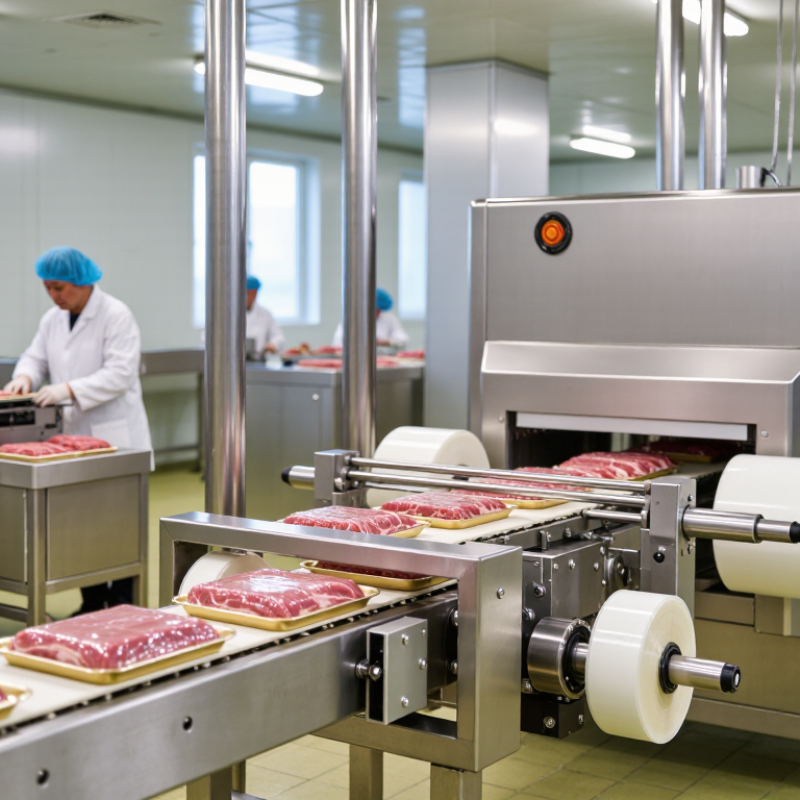
Table of Contents
[Hide]
China’s Meat-Wrapping Machine Market: Key Industry Standards and Trends
China’s meat-wrapping machine market is moving toward safer, faster, and more traceable production. The best machines are not chosen by speed alone. They should support hygienic design, stable sealing, easy cleaning, and accurate temperature control. Food-contact materials must meet applicable Chinese safety requirements, including GB 4806 where relevant. Equipment buyers should also check electrical safety, emergency stops, guarding, and documented testing.
Vacuum packaging and modified-atmosphere packaging remain important for chilled meat. Newer machines often combine weighing, film cutting, sealing, labeling, and data recording. Servo motors can improve portion accuracy. Sensors can detect poor seals before products leave the line. This reduces waste, though maintenance quality still matters more than impressive specifications. Some factories overestimate automation and underestimate operator training. That is a practical weakness worth examining.
Tips: Request sample tests using your actual trays, films, and meat portions. Measure seal strength after refrigeration, not only at room temperature. Check cleaning access around belts, nozzles, and sealing plates. Ask for spare-part availability, training records, and calibration procedures. A machine that runs perfectly during a short demonstration may behave differently during an eight-hour shift. Energy use should also be recorded, especially for heating systems and vacuum pumps. In my view, the most reliable choice balances compliance, serviceability, production capacity, and honest performance data.
What Are the Best Meat Wrapping Machines in China? - China’s Meat-Wrapping Machine Market: Key Industry Standards and Trends
| Machine Type | Typical Applications | Typical Output | Packaging Method | Common Film or Tray Materials | Main Advantages | Key Industry Standards and Requirements | Current Market Trend |
|---|---|---|---|---|---|---|---|
| Tray Sealing Machine | Fresh meat, poultry, seafood, ready-to-cook portions and retail packs | 10–30 trays/min | Heat sealing; optional vacuum or modified-atmosphere packaging | PET, PP, PE and multilayer lidding films; PP, PET or foam trays | Good presentation, consistent sealing and flexible portion sizes | Food-contact materials should comply with applicable requirements such as China GB 4806 series; hygienic design should support HACCP and ISO 22000 systems | Higher demand for MAP, recyclable tray structures, automatic gas control and digital seal monitoring |
| Thermoforming Packaging Machine | High-volume packaging of sliced meat, sausages, bacon and processed meat products | 20–80 cycles/min | Vacuum, MAP or skin packaging | Thermoformable multilayer webs, barrier films and peelable lidding films | High automation, accurate portion control and efficient film utilization | Barrier performance, seal integrity, traceability and cleanability are important for chilled meat applications | Servo-driven forming systems, reduced material consumption and integration with weighing, labeling and inspection equipment |
| Vacuum Chamber Machine | Cuts of beef, pork, poultry, seafood and products requiring extended chilled storage | 2–8 cycles/min | Vacuum sealing in preformed bags | PA/PE, PE/EVOH/PE and other vacuum-barrier pouch structures | Low oxygen exposure, compact footprint and suitability for irregular products | Vacuum level, seal strength, leakage control and food-contact compliance should be validated for the product and pouch | Demand remains strong among small and medium processors seeking affordable automation and simple operation |
| Skin Packaging Machine | Premium fresh meat, steaks, chops, poultry portions and high-visibility retail products | 10–30 trays/min | Vacuum skin packaging | Rigid barrier trays and flexible high-barrier skin films | Close product contact, attractive appearance, reduced purge and strong shelf presentation | Film stretch, seal integrity, oxygen barrier and refrigerated-chain control are critical | Growing use in premium retail because the package improves product visibility and reduces headspace |
| Horizontal Flow Wrapping Machine | Frozen meat blocks, sausages, cooked meat products and individually portioned items | 30–120 packs/min | Fin-seal or three-side seal wrapping | PE, PP, PET/PE and laminated heat-sealable films | Fast operation, continuous production and compatibility with printed film | Seal temperature, film tension, coding quality and package cleanliness must be controlled | Automation is expanding through multi-lane feeding, vision inspection and automatic film-splice systems |
| Shrink Vacuum Packaging Machine | Large primal cuts, whole poultry, ham, smoked meat and export-oriented products | 4–15 packs/min | Vacuum packaging followed by hot-water or steam shrink treatment | Shrinkable PA/PE and multilayer high-barrier films | Tight package appearance, improved product protection and suitability for long-distance distribution | Film shrink performance, residual oxygen, seal durability and refrigerated logistics are major quality factors | More processors are adopting automated loading, leak detection and data recording for export and cold-chain compliance |
Note: Output figures are typical operating ranges for comparable machine categories in the Chinese market. Actual capacity depends on product dimensions, package format, film structure, vacuum level, sealing time, operator loading and automation configuration. Applicable requirements may also include HACCP, ISO 22000, food-contact material regulations, electrical safety requirements and customer-specific export standards.
Related Posts
-
China Top Meat Packaging Equipment for Efficient Food Processing Solutions?
-

How to Choose the Best European Packaging Solutions for Your Business?
-
How to Choose the Right Packaging Machines for Your Business?
-
How to Choose the Best Meat Wrapping Machines for Your Business?
-

Top Pouching Machines for Efficient Packaging Solutions?
-

What Are the Best Impact Packaging Solutions from China?