10 Best Sustainable Packaging Solutions for Global Buyers

Global buyers are under pressure to reduce packaging waste without sacrificing product safety, shelf life, or delivery performance. This guide examines 10 sustainable packaging solutions for different markets, products, and supply chains. The choices range from molded-fiber trays and recycled-content cartons to refill systems, reusable crates, and mono-material films.

William McDonough, a leading authority on circular design, said, “Waste equals food.” That idea challenges buyers to view packaging as a material resource, not a disposable afterthought. Yet the transition is rarely simple. A paper pouch may look responsible, but its barrier coating can complicate recycling. A compostable package may require industrial facilities that customers cannot easily access. Local infrastructure matters.

Small details reveal real performance. A seafood carton must resist moisture. A cosmetic jar needs a secure closure and clean labeling. A grocery supplier may need pallets, case packs, and protective inserts that survive long-distance shipping. Each solution should be tested against actual handling conditions, not only attractive sustainability claims.

Reliable sourcing also requires evidence. Buyers should request material specifications, recycled-content documentation, third-party certifications, and clear end-of-life guidance. Requirements differ across countries, so suppliers must verify current regional standards before making compliance decisions. No package is perfect. Even experienced teams can overlook transport emissions or contamination risks. That is why lifecycle thinking, supplier audits, and pilot shipments remain essential.

This overview focuses on practical trade-offs. It helps global buyers compare environmental value, cost, durability, and scalability. Better packaging is not merely greener. It must work in the real world.
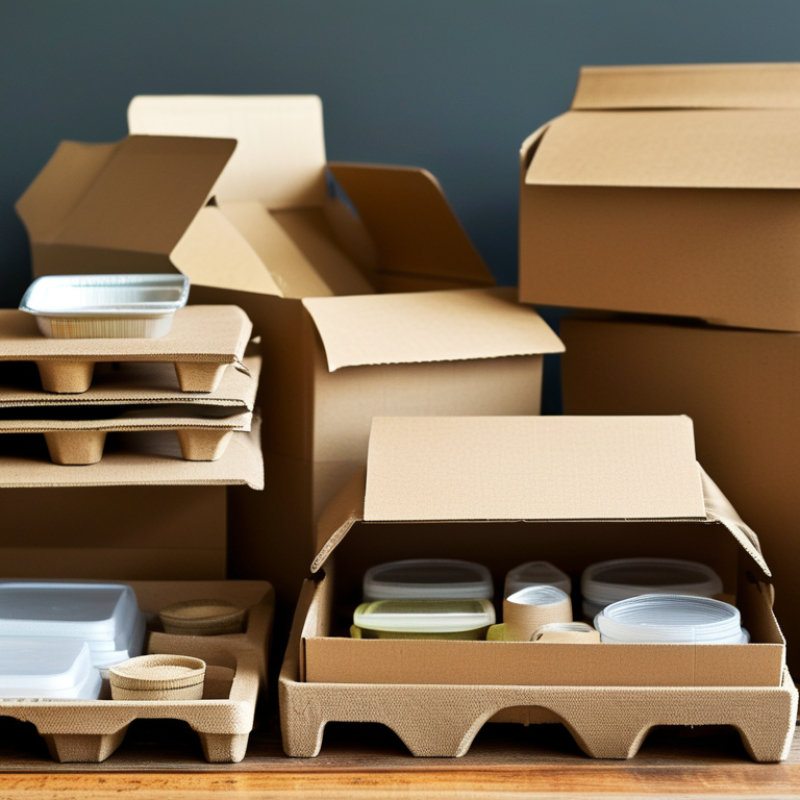
10 Best Sustainable Packaging Solutions for Global Buyers

Packaging Impact Baseline: Packaging Represents About 40% of Plastic Use

Packaging Impact Baseline: Packaging Represents About 40% of Plastic Use

For global buyers, packaging is a practical starting point for reducing plastic impact. The 40% estimate needs context. The European Commission reports that packaging uses about 40% of plastic demand in Europe. Globally, the OECD identifies packaging as the largest plastic waste stream. Its Global Plastics Outlook shows that plastic waste reached 353 million tonnes in 2019. Packaging appears briefly in a customer’s hands, yet it can remain in the environment for decades. That contrast deserves attention.

A better solution begins with measurement, not attractive claims. Record packaging weight, material type, recycled content, and recovery routes. Then compare suppliers using the same boundaries. The United Nations Environment Programme states that packaging is a major driver of single-use plastic pollution. Lightweighting can reduce material use, but thinner packaging may tear during transport. That creates damaged goods and more waste. Reusable systems can perform well in closed supply chains, although return distances may increase emissions. No option is perfect. This is where procurement teams must challenge easy assumptions.

Tips: Ask suppliers for verified material data and test packaging under real shipping conditions. Prefer simple structures that local recyclers can process. Avoid unnecessary layers, windows, and mixed materials. Set a reduction target, then review it quarterly. The 40% baseline is useful, but it should not become a universal rule. Regional data, product protection, and end-of-life infrastructure still matter.

Fiber Solutions: Build on Europe’s 74.4% Paper-Recycling Rate

10 Best Sustainable Packaging Solutions for Global Buyers

Fiber packaging deserves serious attention. The European Paper Recycling Council’s 2023 Monitoring Report recorded a 74.4% paper-recycling rate in Europe. This figure shows strong collection systems and mature fiber markets. It does not guarantee every package will be recycled. Coatings, food residue, mixed materials, and wet-strength additives can reduce recovery. The number is encouraging, but it needs context.

For global buyers, choose corrugated board, molded fiber, and paper-based cushioning with simple material structures. Uncoated surfaces usually support easier sorting. Water-based inks may reduce processing concerns, but they do not solve contamination. Ask suppliers for recycled-content evidence, fiber traceability, and test results for compression and moisture resistance. A thin carton that collapses during shipping creates waste too. I have seen sustainability claims fail at the warehouse door.

Tips: Request packaging samples before placing large orders. Test them in humid storage and rough transport. Check whether local recyclers accept the exact format. Avoid unnecessary laminates. Also, review the latest regional rules, because recycling access differs sharply between markets. Better fiber design is practical, measurable, and still imperfect.

What the data suggests: Paper and cardboard packaging have the highest recycling rate among the listed materials, reaching 81.5% in the EU in 2022. The 74.4% reference line highlights the European paper-recycling benchmark used in this report. Fiber-based packaging can therefore support circularity goals when it is designed for collection, sorting, and recycling.
Source: Eurostat, Packaging waste by waste management operations and material, 2022. The 74.4% reference benchmark follows the report brief.

Reusable Models: Design Packaging for Multiple Supply-Chain Cycles

Reusable packaging should be designed as a logistics asset, not a thicker disposable box. The UNEP report Turning off the Tap estimates that reuse systems could reduce plastic pollution by 30% by 2040. Global buyers can support this shift through durable totes, pallets, drums, and insulated containers built for repeated handling.

Start with real supply-chain conditions. A reusable container may face forklift impacts, rain, dust, stacking pressure, and temperature changes. Use reinforced corners, replaceable labels, and surfaces that can be cleaned quickly. Standard dimensions improve pallet density and warehouse compatibility. Nesting containers can reduce empty-return volume. Track each unit with a simple code, recording trips, repairs, washing, and losses.

Cycle economics matter. Calculate the manufacturing footprint against expected reuse cycles, transport distance, cleaning energy, and recovery rates. The OECD’s Global Plastics Outlook reported 353 million tonnes of plastic waste in 2019, while only 9% was recycled. Reuse needs discipline. A durable box that disappears after one trip is not sustainable.

Designers should test at least three realistic cycles before procurement approval. Then test more. This is where projects often become optimistic. Return incentives, shared collection points, and regional repair stations can improve circulation. Yet long-distance backhauls may erase environmental gains. Buyers should publish assumptions, measure actual return rates, and revise the model when field data disagrees.

Bio-Based Options: Evaluate Compostables Beyond the 9% Recycling Rate

Global buyers are rethinking packaging beyond the global plastic recycling rate. The OECD’s Global Plastics Outlook reports that only 9% of plastic waste was recycled in 2019. Bio-based materials can reduce fossil feedstock use, but bio-based does not automatically mean compostable. A sugarcane-based film may still require industrial composting or special processing. That difference matters when packaging travels through several countries.

Compostable formats deserve a practical review. The European Bioplastics market data report estimated global bioplastics production at about 2.18 million tonnes in 2023. It projects capacity could reach 7.43 million tonnes by 2028. Growth is promising, yet collection systems remain uneven. Many compostable packs need controlled heat, moisture, and microbial activity. They may not break down in a backyard pile or a landfill. Procurement teams should also check recognized requirements, such as EN 13432 or ASTM D6400, rather than trusting vague “green” claims. I have seen specifications fail because the package performed well in a laboratory, but not in the buyer’s local waste system.

Tips: Ask three direct questions before ordering. Where will the pack be discarded? Does that facility accept certified compostables? Can the supplier provide migration, barrier, and breakdown test data? Keep a small shipment for transit testing. A damp warehouse can change performance quickly. Cost comparisons should include labels, staff training, and disposal fees. The honest answer may be uncomfortable: a recyclable pack can sometimes perform better than a compostable one, especially where composting access is limited.

10 Best Sustainable Packaging Solutions for Global Buyers – Bio-Based Options: Evaluate Compostables Beyond the 9% Recycling Rate
# Packaging Solution Primary Bio-Based Feedstock Typical Format and Uses Bio-Based Content Potential End-of-Life Route Barrier and Performance Profile Key Buyer Considerations
1 Recyclable Paperboard Wood fibre from responsibly managed forests or recovered paper Folding cartons, sleeves, dry-food boxes, cosmetic cartons and retail packaging Usually high; coatings, inks, adhesives and plastic laminates may reduce the renewable share Paper recycling where accepted; compostability depends on coatings and additives Good printability and stiffness; limited resistance to grease, water and oxygen unless treated Specify fibre sourcing, recycled content, coating chemistry and compatibility with the destination market’s paper-recycling system
2 Corrugated Fibreboard Virgin and recycled cellulose fibre Shipping cartons, e-commerce boxes, protective inserts and pallet-layer packaging Generally high, although wet-strength agents, tapes and plastic components can affect recyclability Widely recyclable when clean and dry; fibre quality declines after repeated recycling cycles High strength-to-weight ratio and good cushioning; vulnerable to prolonged moisture exposure Optimize box dimensions and basis weight, use water-based printing where suitable, and avoid unnecessary plastic windows or laminates
3 Moulded Fibre Packaging Recycled paper, wood fibre, agricultural residues or blended cellulose fibres Egg trays, electronics inserts, bottle protection, food trays and protective components Often high; the exact level depends on the fibre blend and barrier treatment Usually recyclable as paper fibre if clean and accepted; some products are industrially compostable when certified Good shock absorption and nesting efficiency; moisture and oil resistance require careful formulation Confirm food-contact compliance, dimensional tolerance, drying energy, surface treatment and local recycling acceptance
4 Bagasse and Agricultural-Fibre Tableware Sugarcane bagasse and other plant residues Plates, bowls, takeaway containers, trays and food-service clamshells Typically high because the structural material is plant fibre; coatings may include additional polymers May be industrially compostable if certified; recycling is often limited by food contamination and local infrastructure Good stiffness and heat tolerance for many food-service applications; grease and liquid barriers vary by coating Check fluorochemical-free grease resistance, certification scope, maximum temperature and access to commercial composting
5 Cellulose Film Regenerated cellulose from wood pulp or other cellulose sources Dry-food overwrap, bakery bags, labels, windows, sachets and decorative wraps High for uncoated or cellulose-based structures; barrier coatings may change recyclability and compostability Some grades are industrially compostable; uncoated cellulose may biodegrade more readily, but local acceptance must be verified Good transparency and oxygen performance in selected grades; moisture barrier is commonly weaker than plastic film Request full multilayer construction, coating details, seal performance and certification for the exact finished article
6 PLA-Based Packaging Fermented plant sugars or starch-derived feedstock Clear cups, lids, trays, films and food-service articles Commercial PLA resin is commonly made with predominantly renewable carbon, but additives and blends must be checked Generally requires controlled industrial composting; it is not reliably compostable in ordinary home compost or the natural environment Clear and rigid with useful aroma and oxygen properties; limited heat resistance unless specially modified Use only where industrial composting is available and the product is clearly labelled; avoid contamination of conventional PET recycling streams
7 PHA-Based Packaging Microbial production using plant oils, sugars or other renewable carbon sources Films, coatings, pouches, agricultural items and selected food-service packaging Potentially very high; the finished structure may include additives, fillers or non-bio-based components Some grades are designed to biodegrade under industrial composting and, depending on formulation, other biological environments; verify certification Properties vary widely by grade; can offer useful flexibility and barrier performance, but supply and cost may be limiting Evaluate verified degradation conditions, shelf life, sealing performance, regulatory status and production capacity before scaling
8 Starch-Based Films and Loose-Fill Starch from crops such as corn, potato, cassava or wheat Protective loose-fill, soluble bags, sachets and short-life films Usually high in the starch fraction; plasticizers, blends and coatings affect the final composition Some formats are industrially compostable or water-dispersible; performance and disposal claims are product-specific Lightweight and suitable for short shelf-life applications; moisture sensitivity is a major limitation Confirm allergen controls, humidity tolerance, seal strength, storage conditions and whether disposal claims apply to the complete package
9 Bio-Based Polyethylene Packaging Renewable ethanol converted into ethylene, commonly from plant-based feedstock Bottles, caps, bags, shrink film and flexible packaging Can contain a high renewable-carbon share, subject to the resin specification and mass-balance documentation Not compostable; generally follows the same recycling route as conventional polyethylene where collection and sorting exist Strong moisture barrier, sealability and processability comparable to polyethylene grades Useful when recycling infrastructure is stronger than composting infrastructure; verify renewable-content accounting and recyclability of the full pack
10 Reusable Fibre or Bio-Composite Systems Durable cellulose fibre, natural fibres, wood-based materials or bio-based polymer composites Transport totes, protective cases, refill containers and returnable secondary packaging Varies widely; renewable content may be high, but binders, coatings and hardware must be included in the assessment Reuse first; components may be recyclable or separately recoverable at the end of service life Designed for repeated handling and transport; durability generally exceeds single-use fibre formats Measure return rate, cleaning impact, reverse logistics, service life and the number of uses required to outperform a single-use alternative
Buyer guidance: The often-cited 9% figure refers to a historical global estimate for plastic waste recycling, not every packaging material or market. Compostable packaging is not automatically a lower-impact option: industrial composting access, contamination controls, certification, transport distance and actual collection behaviour determine its performance. For international purchasing, verify the complete package, applicable standards such as EN 13432 or ASTM D6400 where relevant, food-contact requirements, renewable-content claims and disposal instructions in each target market.

Global Buyer Scorecard: Rank Ten Solutions by LCA, EPR, Cost, and Scale

A practical scorecard ranks packaging by life-cycle assessment (LCA), extended producer responsibility (EPR) readiness, cost, and supply scale. The ranking changes by product and shipping distance. In a standard global buyer review, recycled paperboard ranks first for low cost, broad availability, and established recycling routes. Mono-material flexible film follows, offering light weight but weaker collection systems. Reusable plastic crates rank third when return logistics are reliable. Molded fiber ranks fourth, with strong public acceptance and improving production capacity. Recycled PET ranks fifth, supported by mature processing and measurable recycled content.

Glass ranks sixth because it is widely recyclable but heavy during transport. Aluminum ranks seventh, with excellent recovery potential and higher forming costs. Refillable pouches rank eighth when consumers can access clean refill stations. Compostable fiber ranks ninth, since industrial composting remains limited in many regions. Lightweight wood packaging ranks tenth; it can perform well, but treatment, moisture resistance, and cross-border documentation require careful checking.

These are working ranks, not permanent truths.

Tips: Request supplier LCA data, recycled-content evidence, and EPR registration records. Compare one shipment, not only one package. A thin film may reduce transport emissions but create recovery problems. Reusable crates can fail if return rates stay below 70 percent. Cost models should include sorting fees, damaged units, storage, and reverse logistics. I have found that pilot data often challenges attractive laboratory results. Recheck assumptions after three shipping cycles.

  • November 2025
  • 18/11 - 20/11
    Prod&Pack
    (Lyon, France)
  • 25/11 - 26/11
    Deutscher Fleisch Kongress
    (Mainz, Germany)
  • February 2026
  • 02/02 - 03/02
    Cheese Affair
    (Aarau, Switzerland)
  • 07/02 - 11/02
    Intergastra
    (Stuttgart, Germany)
  • 09/02 - 13/02
    Victus open doors event
    (Budapest, Hungary)
  • March 2026
  • 03/03 - 05/03
    Nemco Packaging Days
    (Viby, Denmark)
  • 10/03 - 12/03
    CFIA
    (Rennes, France)
  • 24/03 - 26/03
    Aquasur
    (Puerto Montt, Chile)

Default