Choosing among China’s top 10 bakery packaging equipment manufacturers requires more than comparing catalog prices. A suitable supplier must understand bread, pastries, cakes, and frozen products. Each item behaves differently during filling, sealing, wrapping, and transport. This guide introduces manufacturers that serve these practical production needs. It focuses on measurable performance, not impressive claims alone.
The evaluation considers automation level, packaging speed, sealing stability, material compatibility, and cleaning access. It also examines machine construction, control systems, spare-part availability, and technical support. A reliable bakery packaging equipment supplier should provide clear specifications and realistic output figures. Factory testing matters. So does after-sales response.
Small details often reveal manufacturing quality. Does the film track smoothly during an eight-hour shift? Can operators remove crumbs from the conveyor without tools? Does the seal remain tight after cooling and handling? These questions matter in real bakeries. Certification, export experience, and documented customer applications can strengthen confidence, but they do not replace product trials.
No ranking is permanently perfect. Market positions change. Some manufacturers excel at flow wrapping, while others perform better with vertical packing, carton forming, or end-of-line systems. A lower-cost machine may appear attractive, yet maintenance delays can increase total ownership costs. Readers should verify current models, factory capabilities, certifications, and local service conditions before making a decision. The manufacturers discussed here are selected as practical candidates, not automatic winners. Your product, workspace, labor model, and packaging material should determine the final choice.
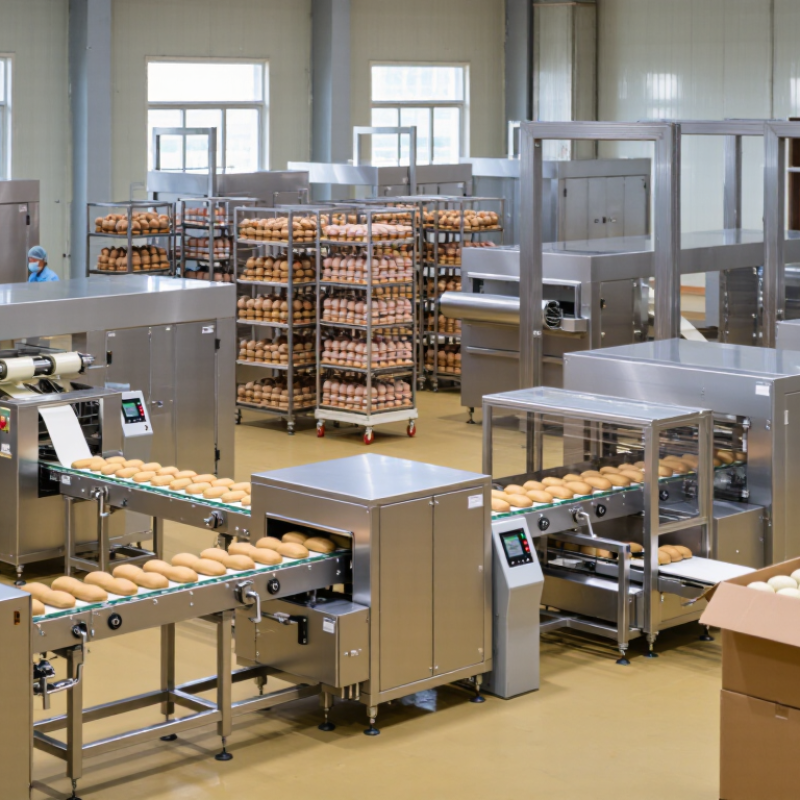
What Is Bakery Packaging Equipment and Why Does It Matter?
Bakery packaging equipment includes flow wrappers, tray sealers, cartoners, checkweighers, and case packers. These machines protect bread, cakes, biscuits, and pastries from moisture, dust, crushing, and handling damage. A well-designed line also controls portion accuracy and production speed. Small errors multiply.
The value is not only operational. FAO reports that approximately 14% of food is lost between harvest and retail, while UNEP estimates that 8–10% of global greenhouse gas emissions relate to food waste. Packaging cannot solve every loss, but suitable sealing and distribution protection can reduce avoidable bakery waste. Smithers projects the global packaging market will exceed 1.2 trillion US dollars by 2028, showing continued demand for efficient protection systems. Equipment selection still requires judgment. Faster is not always better. Excessive speed may create weak seals, product deformation, or more rejected packs.
Tips: Match the machine with product texture, pack size, humidity, and cleaning requirements. Test real products before purchase. Measure seal strength, changeover time, waste rate, and energy use. PMMI industry reports consistently identify labor availability and automation as major packaging investment drivers. Therefore, simple controls, accessible maintenance points, and clear operator training matter as much as output. A line that looks impressive may perform poorly during frequent product changes. Reliable results deserve priority over impressive specifications.
Bakery packaging equipment includes machines used to wrap, seal, inspect, label, and carton bakery products. The chart compares representative nominal throughput capacities for ten widely used equipment categories. Actual performance varies according to product size, packaging material, automation level, and production line configuration.
Throughput is shown in packages per minute. Higher capacity can improve productivity, reduce manual handling, and support consistent product protection, but equipment selection should also consider hygiene, sealing quality, flexibility, and total operating cost.
China Top 10 Bakery Packaging Equipment Manufacturers?
Evaluating Chinese bakery packaging equipment manufacturers requires more than comparing prices. PMMI’s 2024 packaging machinery outlook highlights labor shortages, automation, and digital monitoring as major investment drivers. Ask each supplier for hourly output, sealing accuracy, changeover time, and energy consumption. Numbers matter.
Inspect the machine in operation. A reliable supplier should provide factory acceptance testing, sample packages, and records from similar bakery applications. Check whether the equipment handles fragile bread, sticky pastries, and different film thicknesses without frequent adjustments. Request maintenance intervals, spare-parts availability, and remote troubleshooting response times. A five-minute video proves little.
Documentation is equally important. Review electrical drawings, software descriptions, food-contact material declarations, and applicable export conformity documents. ISO 9001 certification can support process control, but it does not guarantee machine performance. PMMI research also shows that connected machinery is gaining importance, so ask about data access, user permissions, and cybersecurity controls. Smithers’ global packaging forecasts point to continued demand for automation and more efficient materials, yet efficiency claims should be tested with your products. One weakness remains common: some evaluations trust a polished showroom more than a monitored trial. Use a written acceptance checklist, record reject rates for several hours, and compare promised output with actual results. Need improvement.
| Rank | Anonymous Supplier Profile | Main Bakery Packaging Focus | Indicative Output Range | Typical Packaging Formats | Key Technical Evidence to Request | Compliance Check | Recommended Evaluation Method |
|---|---|---|---|---|---|---|---|
| 1 | High-speed horizontal flow-wrapper profile | Bread, rolls, buns, snack cakes, and individually wrapped pastries | Approximately 40–250 packs/min, depending on product size and sealing configuration | Pillow bags, fin-seal packs, and modified-atmosphere packs | Actual production video, sealing-temperature range, film specification, reject rate, and changeover time | Electrical safety documentation, CE-related technical file where applicable, and food-contact material declarations | Run the buyer’s products and film for at least 2–4 hours at the agreed speed |
| 2 | Automatic premade-pouch packaging profile | Cookies, sliced bread, biscuits, and bakery snacks requiring resealable bags | Approximately 20–90 pouches/min, depending on pouch style and filling process | Stand-up pouches, flat pouches, zipper bags, and gusseted bags | Pouch-size range, zipper compatibility, empty-pouch rejection rate, and filling accuracy | Risk assessment, guarding design, emergency-stop validation, and hygienic machine construction | Check pouch opening, product orientation, seal integrity, and downtime during size changes |
| 3 | Vertical form-fill-seal profile | Cookies, crackers, bread crumbs, cereal bakery products, and small loose pieces | Approximately 25–100 bags/min, based on product flowability and bag dimensions | Pillow bags, gusseted bags, block-bottom bags, and sachets | Film width, bag-length tolerance, dosing accuracy, seal-jaw design, and product-contact materials | Food-contact declarations, sanitation procedure, electrical drawings, and spare-parts list | Measure net-weight variation over a statistically meaningful sample and inspect seal strength |
| 4 | Cartoning and case-packing profile | Retail bakery boxes, multipacks, trays, and shipping cartons | Approximately 10–60 cartons/min, depending on carton size and loading pattern | Horizontal cartons, tuck-end boxes, wraparound cases, and shelf-ready packaging | Carton-size range, loading accuracy, glue or lock-bottom performance, and line integration drawings | Machine guarding, noise declaration, electrical conformity, and documentation in the buyer’s language | Test carton erection, product loading, closing quality, and jam recovery by trained operators |
| 5 | Tray-forming and sealing profile | Cakes, muffins, pastries, sandwiches, and delicate bakery products | Approximately 15–80 trays/min, depending on tray material and sealing method | MAP trays, skin packs, sealed trays, and lidded trays | Tray dimensions, sealing temperature and pressure, gas-flushing performance, and leak-test results | Food-contact compliance for tray and film, hygienic design review, and sanitation instructions | Verify package leak rate, residual oxygen where MAP is used, and product protection during handling |
| 6 | Multihead-weighing and bakery-snack line profile | Cookies, crackers, mini pastries, and mixed bakery snacks | Approximately 30–120 weighments/min, depending on target weight and product fragility | Pillow bags, gusseted bags, jars, tubs, and multipack containers | Target-weight accuracy, product-contact surface finish, memory capacity, and synchronization with the bagger | Calibration procedure, hygienic design, electrical schematics, and preventive-maintenance schedule | Perform repeated weighing tests and calculate average error, standard deviation, and giveaway percentage |
| 7 | Metal-detection and checkweighing integration profile | Packaged bread, pastries, cookies, and finished bakery products | Approximately 30–180 packs/min, depending on conveyor width and inspection settings | Flow-wrapped packs, cartons, trays, and multipacks | Detection sensitivity, test-piece records, checkweigher accuracy, reject confirmation, and data logging | HACCP-based control documentation, calibration records, access control, and reject-bin security | Challenge the system with certified test pieces and underweight samples at normal line speed |
| 8 | Robotic pick-and-place automation profile | Delicate pastries, buns, cartons, trays, and bakery products requiring gentle handling | Approximately 20–120 picks/min, depending on robot type, product weight, and layout | Trays, cartons, flow-wrapped products, and display-ready cases | Pick accuracy, product-drop rate, gripper design, robot reach, cycle-time study, and guarding layout | Functional safety assessment, safety-controller documentation, and hygienic material specifications | Use representative products to assess deformation, orientation accuracy, and recovery after stoppage |
| 9 | End-of-line palletizing profile | Cartons and cases of bread, cakes, biscuits, and bakery multipacks | Approximately 4–20 cases/min, depending on case weight and pallet pattern | Regular cases, display cases, mixed-SKU pallets, and slip-sheet applications | Maximum case weight, pallet dimensions, layer pattern, cycle time, and accumulation capacity | Safety-zone validation, guarding, emergency-stop testing, and operator-training materials | Verify pallet stability, case compression, pattern repeatability, and safe manual intervention procedures |
| 10 | Complete turnkey bakery packaging-line profile | Integrated lines combining feeding, primary packaging, inspection, cartoning, and palletizing | Approximately 30–250 primary packs/min, subject to the slowest line module | Flow packs, trays, cartons, cases, and palletized finished goods | Complete layout, line-balance calculation, overall equipment effectiveness target, utility consumption, and interface list | Quality-management evidence, food-safety documentation, technical file, software backup, and spare-parts commitment | Use a signed FAT/SAT protocol covering throughput, yield, changeover, safety, training, and documentation |
China’s Top 10 Bakery Packaging Equipment Manufacturers
China’s bakery packaging sector is expanding with convenience foods, frozen products, and online delivery. A 2024 assessment by Mordor Intelligence identifies China as one of Asia’s strongest packaging machinery markets. PMMI’s 2024 Global Packaging Trends report also highlights automation, connected controls, and labor reduction as major investment priorities. These trends shape how the top ten manufacturers should be evaluated.
Reliable suppliers usually provide flow wrapping, vertical bagging, cartoning, sealing, and coding systems. Buyers should inspect actual throughput, not only catalog speed. For example, a machine rated at 150 packs per minute may slow sharply with sticky fillings or uneven bread sizes. Stainless-steel frames, tool-free changeovers, and washdown-friendly designs matter in daily bakery production. Energy use matters too. A 2023 report from the International Energy Agency links industrial efficiency with smarter motor control and reduced downtime.
The strongest candidates combine engineering depth with practical service. Their factories should show test runs using real products, including cream rolls, sliced loaves, and fragile pastries. Documentation should cover accuracy, spare parts, software updates, and operator training. Some suppliers still overstate automation benefits. That deserves scrutiny. A modest machine with stable sealing can outperform a faster system that frequently rejects packages. Buyers should request acceptance tests, maintenance records, and transparent performance data before selecting among China’s top ten manufacturers.
China Top 10 Bakery Packaging Equipment Manufacturers?
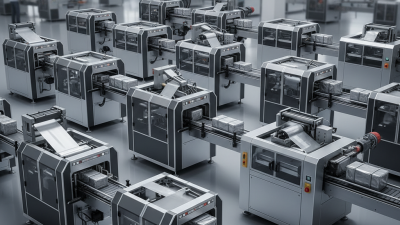
Leading Chinese bakery packaging equipment manufacturers now offer complete systems rather than isolated machines. Common equipment includes horizontal flow wrappers, vertical baggers, carton erectors, tray sealers, multihead weighers, and robotic case packers. Servo motors improve film control and sealing accuracy. Vision inspection systems detect missing products, open seals, and damaged packages. These details matter when soft bread enters a line warm and slightly uneven.
PMMI’s 2024 State of the Industry report placed U.S. packaging machinery sales at roughly 11 billion dollars in 2023. This figure reflects strong demand for automation, flexible formats, and labor-saving systems. For bakery producers, quick-change tooling supports bread, cakes, cookies, and pastries on one line. Modified-atmosphere packaging can also extend freshness, but results depend on gas balance, film quality, and product temperature. More automation is not always better.
Reliable suppliers usually provide PLC controls, remote diagnostics, stainless-steel frames, and washdown-friendly designs. Some lines reach hundreds of packages per minute, yet actual output depends on product shape and operator skill. Factory acceptance testing should measure sealing strength, film waste, changeover time, and reject accuracy. The Institute of Packaging Professionals identifies seal integrity and material compatibility as core packaging quality factors. Buyers should request production trials. A polished demonstration can hide difficult maintenance.
Choosing a Chinese bakery packaging equipment manufacturer requires more than comparing prices. Check its experience with your product type, packaging material, and daily production volume. Ask for factory videos, machine specifications, and recent customer references. A reliable supplier should explain sealing temperature, film compatibility, speed limits, and maintenance needs clearly.
Request a sample test using your actual bread, pastries, trays, and packaging film. Watch the machine during startup, continuous operation, cleaning, and emergency stops. Confirm electrical standards, spare-part availability, installation support, and operator training. Written warranties matter, but practical response times matter more. Some suppliers promise impressive output figures. Real production may be slower after staff changes or frequent product adjustments.
Tips: Compare total ownership cost, not only the quotation. Ask for a detailed list of included parts and services. Inspect welds, guards, control panels, and stainless-steel surfaces. If possible, use an independent engineer during acceptance testing. A factory visit can reveal more than polished brochures. Still, one visit is not proof of everything. Keep questioning unclear claims, and record every agreed specification before payment. Older equipment may look dependable, yet its controls can be difficult to replace. Newer equipment may be efficient, but its long-term reliability remains unproven. The right manufacturer balances tested performance, transparent communication, and support after delivery.