Choosing bakery packaging equipment in 2026 requires more than comparing prices and machine speed. Bakeries must consider product protection, labor needs, energy use, hygiene, and future production changes. A machine that suits a small pastry shop may fail in a high-volume bread facility. The right decision begins with the product, not the equipment brochure.
This guide examines bakery packaging equipment through practical operating conditions. It considers flow wrapping, tray sealing, carton packing, labeling, coding, and end-of-line systems. Details matter. A delicate croissant can collapse under excessive pressure. A warm loaf may create condensation inside unsuitable film. Even a small change in seal temperature can produce waste, leaks, or customer complaints.
Reliable selection also requires evidence. Buyers should review factory trials, cleaning procedures, spare-parts availability, operator training, and documented safety features. Equipment suppliers should explain performance using realistic bakery products, not only showroom demonstrations. Independent certifications and applicable food-contact requirements deserve careful checking. Claims about speed need context.
Not every recommendation will fit every bakery.
Budget pressure can encourage shortcuts. However, cheaper equipment may increase downtime, maintenance costs, or packaging waste over several years. A thoughtful evaluation should compare total ownership costs, changeover time, software compatibility, and service response. It should also leave room for honest uncertainty. Production forecasts can be wrong. Consumer preferences can shift. Therefore, the best choice is usually a flexible, maintainable system that protects food quality today and supports measured growth tomorrow.
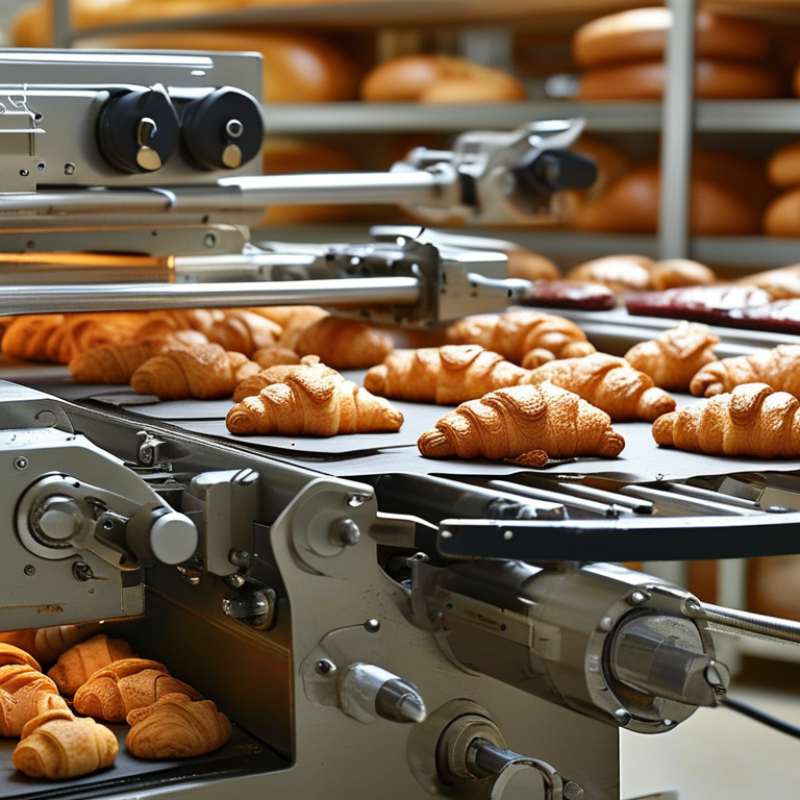
In 2026, bakery packaging equipment should begin with measured throughput, not a catalog specification. Record finished units per hour for each product, including cooling, rejects, cleaning, and changeovers. A filled croissant and a sliced loaf rarely tolerate the same handling speed. Name the product clearly. Measure the real line.
If daily demand reaches 18,000 units across eight hours, the nominal target is 2,250 units hourly. Add a practical buffer for stoppages, but avoid buying capacity that remains idle. A 25 percent allowance may fit unstable demand, while a smaller cushion may suit predictable contracts. Forecasts are imperfect. Check them against production records.
Pillow bags, trays, cartons, and multipacks require different feeding and sealing control. Check film width, product dimensions, closure style, label placement, and changeover time with production staff. I have seen plans fail because a “fast” machine ignored twelve-minute format changes. That mistake looked minor on paper. Use trial runs and acceptance tests. Ask whether operators can clear jams safely and maintain consistent seals during peak weeks. Machines that reach target only under ideal conditions can disappoint during humid mornings or holiday surges.
Choosing bakery packaging equipment in 2026 starts with the line, not the brochure. A practical benchmark is 85% OEE, often described as world-class performance. OEE combines availability, performance, and quality. It exposes losses that hourly output can hide. In a bakery, a fast wrapper may still underperform after film changes, jams, or cooling delays. I have found that operators trust measured minutes more than impressive speed claims.
Record actual production for several shifts before selecting equipment. Measure dough temperature, product size, changeover time, minor stops, rejects, and cleaning intervals. Then match rated speed to sustainable speed, not the peak setting. If a line is rated for 240 packs per minute, test whether it holds 200 during normal shifts. That difference matters.
At 85% OEE, a 200-pack line should produce about 170 good packs per minute over planned time. The calculation is simple, but the inputs are often rough. We sometimes overestimate availability because short stoppages go unrecorded.
Choose controls that show stop codes, actual counts, reject rates, and changeover duration. Ask for trial data using your own bread, pastries, trays, and packaging materials. Check access around sealing jaws and conveyors. Awkward cleaning can quietly reduce availability.
Leave capacity for seasonal peaks, but avoid buying speed the team cannot stabilize. An efficient line needs trained operators, spare wear parts, and repeatable settings. A realistic 85% OEE plan may beat a 300-pack promise. Still, 85% should guide investigation, not become a rigid score. Your first week may reveal that labor balance, not equipment speed, is the real constraint.
Choosing bakery packaging equipment in 2026 requires more than speed, output, or attractive controls. The machine must support safe food contact during filling, sealing, conveying, and cleaning. FDA 21 CFR and EU Regulation 1935/2004 should guide every material decision. These rules are not interchangeable certificates.
FDA 21 CFR may apply to polymers, coatings, adhesives, lubricants, and other contacting materials. Ask suppliers for exact regulation references, declarations, and migration test results. For European use, request evidence for the intended food type and operating conditions. Temperature, acidity, fat content, and contact time can change compliance requirements. Do not accept vague claims.
Inspect product zones physically. Look for suitable stainless steel, smooth welds, sealed bearings, and cleanable corners. Packaging dust often settles beneath guards and around sealing jaws. Those areas need practical access, not only a statement in a manual. In equipment reviews, broad compliance letters sometimes hide missing material details. A better process links every food-contact part to a specification and supplier record. Keep batch numbers, test reports, cleaning chemicals, and maintenance lubricants traceable. This may feel slow. It prevents costly uncertainty later. I would also challenge my checklist each year, because films, inks, and temperatures can change. Ask for current documents, not recycled files.
Practical comparison of bakery packaging equipment and the food-contact documentation required for purchasing decisions.
| Equipment Area | Typical Food-Contact Parts | Common Material Options | FDA Verification Route | EU Verification Route | Purchasing Evidence to Request | Key 2026 Selection Check |
|---|---|---|---|---|---|---|
| Horizontal flow wrapper | Product-contact forming surfaces, film guides, sealing jaws, infeed belts | Food-contact plastics, stainless steel, silicone or elastomeric seals | Confirm each food-contact substance is covered by an applicable FDA regulation in 21 CFR, such as Parts 177 or 178, or by another valid FDA authorization pathway. | Confirm compliance with Regulation (EC) No 1935/2004, Regulation (EC) No 2023/2006 on good manufacturing practice, and Regulation (EU) No 10/2011 where plastic parts are used. | Material specifications, supplier declarations, intended-use conditions, migration test reports where applicable, and a parts list identifying all food-contact materials | Check seal-temperature range, film compatibility, cleanability, and whether lubricants or coatings can contact food. |
| Vertical form-fill-seal machine | Product chute, dosing tube, forming collar, discharge contact surfaces | Stainless steel, engineering plastics, food-contact elastomers | Review the specific resin, additive, seal, and coating identities against the applicable 21 CFR sections and conditions of use; do not rely only on a general “FDA approved” statement. | Request a written Declaration of Compliance for applicable plastic materials and verify restrictions, food types, temperature, and contact-time conditions. | Signed compliance declaration, technical construction file, hygienic design drawings, and test conditions matched to the bakery product | Confirm accurate dosing at the lowest and highest planned product throughput and verify that the product path has no inaccessible residue traps. |
| Premade-pouch or bagging machine | Bag opening guides, loading funnels, transfer belts, sealing assemblies | Stainless steel, low-friction plastics, food-contact rubber or silicone | Verify that polymers, adhesives, coatings, and elastomers used in contact areas are authorized for the intended food-contact application under 21 CFR or another documented FDA authorization. | Verify Article 3 safety requirements under Regulation (EC) No 1935/2004 and material-specific measures, especially Regulation (EU) No 10/2011 for plastics. | Food-contact surface schedule, adhesive and coating declarations, traceability procedure, and cleaning instructions | Evaluate bag-opening reliability, static control, product damage, and changeover time between package sizes. |
| Multihead or linear weigher | Weigh hoppers, contact chutes, feeder trays, discharge gates | Stainless steel, food-contact polymers, elastomeric gaskets | Check the regulatory status of plastics, colorants, lubricants, and elastomers under the applicable 21 CFR requirements; confirm that food-contact use is within the stated conditions. | Request declarations and supporting migration data for plastic components. Under Regulation (EU) No 10/2011, overall migration is generally limited to 10 mg/dm² or 60 mg/kg food when the regulation applies, subject to its conditions and exceptions. | Calibration records, material certificates, migration reports, and a complete list of food-contact replacement parts | Compare target weight accuracy, product-fragment handling, dust control, and the time required to remove hoppers for sanitation. |
| Conveyor and transfer system | Belts, rollers, side guides, transfer plates, belt supports | Food-contact belt materials, stainless steel, acetal or other documented engineering plastics | Obtain the belt and polymer compliance documentation separately from the machine declaration; verify additives, pigments, lubricants, and temperature limitations. | Confirm compliance with Regulation (EC) No 1935/2004 and applicable material-specific rules, plus traceability under Article 17. | Belt declaration, batch traceability information, surface-finish specification, washdown instructions, and replacement-belt requirements | Select belt construction according to oil, sugar, moisture, temperature, abrasion, and allergen-cleaning requirements. |
| Tray-loading and carton-closing equipment | Product guides, tray nests, pushers, carton-contact transfer parts | Stainless steel, food-contact plastics, low-friction liners | Determine whether parts are direct-contact or only incidental-contact. Direct-contact components require documented compliance with applicable FDA food-contact requirements. | Determine whether materials fall under harmonized EU measures or national rules. Ensure the finished article does not transfer substances that endanger health or adversely affect food composition or organoleptic properties. | Contact classification, material declarations, adhesive and ink information for packaging materials, and line-clearance procedures | Check tray alignment, carton-size flexibility, compression force, and protection against product deformation. |
| Metal detector or checkweigher | Conveyor belt, reject flap, product guides, discharge chute | Food-contact belt material, stainless steel, documented polymers and seals | Verify food-contact materials separately; the detection or weighing function itself does not establish FDA food-contact compliance. | Verify food-contact materials under Regulation (EC) No 1935/2004 and applicable specific measures, with traceability for replaceable components. | Belt declaration, reject-system validation, calibration records, and documented material substitutions | Confirm sensitivity and checkweighing performance using representative products, packaging formats, and line speeds. |
| Case packer and robotic pick-and-place system | Grippers, vacuum cups, product guides, accumulation surfaces | Food-contact silicone or elastomers, stainless steel, food-contact engineering plastics | Request composition and authorization details for gripper materials, coatings, adhesives, and lubricants that may contact unpackaged bakery products. | Obtain a Declaration of Compliance where required and verify suitability for the actual food type, contact duration, temperature, and repeated-use conditions. | Component-level declarations, hygienic risk assessment, cleaning validation method, and spare-part equivalence controls | Assess gentle handling of fragile products, gripper replacement frequency, and the risk of cross-contact between allergens. |
| Cleaning and sanitation design | All product-contact surfaces, seals, drainage points, removable parts | Corrosion-resistant stainless steel, suitable polymers, food-contact elastomers | FDA food-contact status does not replace sanitation controls. Confirm that materials remain suitable after exposure to the stated cleaning chemicals, temperature, and mechanical action. | Apply Regulation (EC) No 2023/2006 GMP principles and Regulation (EC) No 1935/2004 requirements; maintain documentation and traceability for food-contact materials. | Cleaning validation protocol, chemical compatibility data, preventive-maintenance schedule, surface-finish records, and change-control procedure | Prefer tool-less disassembly, positive drainage, minimal hollow sections, visible weld quality, and documented allergen-changeover procedures. |
How to Choose Bakery Packaging Equipment in 2026?
Automation should match your production rhythm, not impress visitors. The 2024 World Robotics report recorded 541,302 industrial robot installations worldwide in 2023, a 10% annual increase. Bakery operators can use this trend to reduce repetitive loading, tray handling, and case packing. However, higher automation does not automatically create higher profit. A machine that runs 60 packs per minute may lose money during frequent product changes. Measure actual output, not catalogue speed. Record one week of stoppages, labor hours, rejected packs, and cleaning delays before comparing equipment.
Changeover time deserves a hard calculation. If a line changes recipes six times daily, cutting each changeover from 35 to 15 minutes recovers two hours. That time can support another production run. Tool-free guides, recipe storage, accessible controls, and clear sanitation zones usually matter more than complex features. The PMMI 2024 State of the Industry report identifies labor challenges and automation investment as continuing packaging priorities. Still, integration costs are easy to underestimate. Include installation, operator training, spare parts, software support, energy, maintenance, and packaging waste in the total cost of ownership. A cheaper machine may require more labor and produce more startup scrap. My caution is simple: projected savings often look cleaner than factory reality. Validate them with a short production trial.
Choosing bakery packaging equipment in 2026 should begin with product risk, not showroom features.
In production trials, I examine the complete sealing process: film alignment, jaw temperature, pressure, dwell time, and cooling. A seal can look smooth yet fail after transport. Small leaks matter. Test samples immediately, then repeat after vibration, stacking, and temperature changes. Use dye, burst, peel, or vacuum tests suited to the package material. Record settings beside each result.
Do not guess.
Metal detection should match the product’s moisture, salt, temperature, and package format. Validate sensitivity with certified test pieces, placed at different positions and passed through the aperture. Check reject timing, alarm visibility, and locked access to rejected product.
Operators need a clear response procedure, not merely a warning light. Challenge tests should follow a documented schedule, with results reviewed by trained supervisors.
I have seen teams test only at shift start; that habit leaves an uncomfortable gap.
Build these controls into a HACCP plan. Identify hazards at mixing, baking, cooling, filling, sealing, and dispatch. Define critical limits, monitoring frequency, corrective actions, and verification records.
Equipment should support hygienic cleaning, tool-free access where practical, and clear data capture. Run factory acceptance trials with real bakery products, including crumbs and oily fillings.
A perfect specification on paper may disappoint on a busy line. Recheck after maintenance, recipe changes, and film changes.
Reliable decisions come from evidence, not confidence.