Choosing European packaging solutions for global buyers requires more than comparing prices and attractive designs. Packaging must protect products through warehouses, ports, customs checks, and changing climates. A rigid carton may look premium in a showroom but weaken after days in humid transit. A lightweight pouch may reduce freight costs yet need stronger seals for long-distance handling.
This guide examines how buyers can assess materials, production quality, certifications, customization, and supplier reliability. It also considers recycled content, recyclability, food-contact suitability, labeling needs, and regional disposal systems. These details matter when packaging reaches a supermarket shelf in Singapore, a pharmacy in Toronto, or a warehouse in Dubai. Real supplier evaluation should include factory audits, sample testing, technical drawings, and clear communication about minimum order quantities. Ask difficult questions early. Silence can be expensive.
No package fits every market. That is easy to forget. European manufacturing can offer strong engineering and consistent quality, but buyers should not assume every supplier meets every regional requirement. Standards, transport routes, customer expectations, and end-of-life infrastructure vary widely. Some decisions will remain imperfect because forecasts change and sustainability data may be incomplete. Transparent documentation helps reduce that risk. Experienced buyers compare total cost, not only unit price. They review damage rates, lead times, storage conditions, and after-sales support. A dependable packaging partner should explain limitations plainly, provide traceable specifications, and improve solutions when testing reveals weaknesses.
Choosing European packaging solutions for global buyers starts with a precise requirement brief. Identify product dimensions, net weight, fragility, moisture exposure, and expected shelf life. Record the shipping route, handling points, storage climate, and target market. A glass vial needs different protection from a flexible pouch. Small details matter. During supplier reviews, I have seen projects fail because teams measured the product but ignored pallet height. That mistake increased warehouse costs and damaged loading efficiency.
Define the main packaging objective in measurable terms. Is it lower breakage, longer freshness, easier opening, or reduced material use? Set acceptable limits, such as less than one percent transport damage or a twenty-second packing time. Ask whether machines can run the proposed format without costly changes. Check filling speed, sealing temperature, barcode placement, and carton compression strength. Requirements should also include clear labeling, traceability, and suitable recyclable material goals. Do not assume one solution fits every country.
Use samples and realistic trials before approving specifications. Test packed units after vibration, stacking, temperature shifts, and ordinary warehouse handling. Compare results with the buyer’s actual route, not only laboratory conditions. A practical checklist helps purchasing, engineering, and logistics teams make the same decision. It also exposes weak assumptions. We sometimes overdesign packaging. That protects the product, but can waste space and money. Review the evidence with qualified packaging engineers and logistics partners, then revise the brief when field data disagrees. Reliability comes from documented tests, transparent limits, and repeatable decisions.
How to Choose European Packaging Solutions for Global Buyers
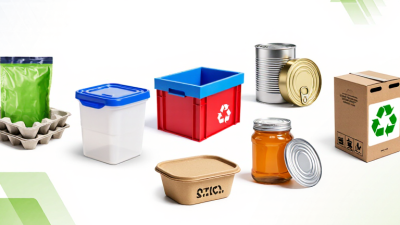
European packaging materials differ in strength, barrier performance, appearance, and end-of-life options. Corrugated board suits shipping cartons because its fluted layers absorb impacts. Folding carton creates a cleaner retail presentation and uses less space. However, it can lose stiffness in humid climates.
Glass offers strong product protection and a premium feel, but its weight increases transport emissions and handling costs. Aluminum is lightweight, highly protective, and useful for sensitive products. Flexible laminates provide excellent moisture and oxygen barriers. Their mixed layers can make recycling more difficult in some markets.
Format matters as much as material. A sachet reduces volume, while a bottle improves pouring and resealing. A tray may support fast packing but needs accurate sizing. Global buyers should test formats through vibration, compression, temperature, and humidity trials. Small details matter. A loose closure can cause costly damage.
Tips: Match the pack to the full journey, not only the factory. Check local recycling guidance before approving a material. Ask suppliers for migration, strength, and barrier test data. Compare shipping weight, pallet efficiency, and storage conditions. A package that performs well in Europe may need changes elsewhere. That is easy to underestimate. Pilot testing may reveal an inconvenient truth: the most attractive format is not always the most reliable.
Compare European packaging materials and common product formats using the latest available EU packaging recycling data.
How to read the chart: Paper and cardboard packaging formats, such as folding cartons and corrugated cases, show the highest recycling rate among the listed materials. Glass bottles and jars, metal cans, and plastic containers offer different trade-offs in protection, weight, transport efficiency, and end-of-life recovery.
Source: Eurostat, EU packaging waste recycling rates by material, 2022. Rates are rounded percentages.
A compliant package begins with the destination market, not the supplier’s brochure. European packaging may meet regional requirements, yet fail during import checks elsewhere. Ask for material specifications, test reports, and documented declarations of conformity. Check whether labels, recycling marks, and chemical disclosures match the receiving country. Keep every version controlled.
Safety evidence should reflect the product’s real journey. Consider temperature changes, humidity, compression, vibration, and repeated handling. For food or sensitive goods, review migration testing and contamination controls. For industrial packaging, verify load ratings, closure performance, and worker handling risks. A sample that survives a warehouse test may still fail on a six-week sea route.
Sustainability claims require careful examination. Request recycled-content evidence, responsible fiber documentation, and current recyclability guidance. Compare the complete life cycle, including production, transport, reuse, and disposal. A lighter package is not automatically better if it breaks and causes damaged goods.
Ask whether recovery systems actually exist in the destination market. Suppliers should explain limitations clearly, not hide them behind broad environmental language. Buyers should also inspect audit dates, laboratory competence, and corrective-action records. Documents can be technically complete but practically outdated. Build a review schedule, because standards, materials, and market expectations change.
Global buyers need more than attractive packaging samples. They need evidence that a supplier can repeat quality at scale. Start by reviewing recent audit records, factory ownership, equipment lists, and export experience. Ask who actually controls production. A trading office may outsource every critical step. Request a capacity plan showing monthly output, shift patterns, maintenance windows, and peak-season limits. Compare those figures with your forecast, not only the supplier’s best month. A factory producing two million units monthly may still struggle with a sudden 30 percent increase. That gap matters.
Quality controls should be visible on the production floor. Check incoming material inspections, color references, dimensional tolerances, seal-strength tests, and final sampling plans. For printed packaging, review ink adhesion and rub-resistance results under realistic handling conditions. Ask for batch coding and retained samples. These details support traceability when cartons arrive with crushed corners or uneven color. Independent testing can verify material composition and performance claims when applicable. Do not accept certificates without checking their scope, date, and issuing laboratory. Paperwork can look complete.
Production visits reveal uncomfortable truths. Observe line changeovers, rejected units, storage conditions, and worker instructions. Ask how nonconforming products are isolated and corrected. A corrective-action report should identify the cause, owner, deadline, and verification step. Still, no control system is perfect. Leave room for pilot orders and tighter inspections before scaling. A supplier may promise stable output, yet a holiday shutdown or material shortage can expose weak planning. That risk deserves an honest conversation, not a polished presentation.
| Packaging Solution | Typical Material Structure | Common End Uses | Indicative Production Capacity | Typical Initial Lead Time | Typical MOQ for Standard Production | Supplier Capabilities to Assess | Key Quality Controls | Relevant Standards or Certifications | Global Buyer Risk Level |
|---|---|---|---|---|---|---|---|---|---|
| Corrugated Transport Packaging | Single-wall or double-wall paper-based corrugated board | Export cartons, e-commerce shipping boxes, industrial transit packaging | Approximately 20–150 million square metres per year per production site | 3–8 weeks after artwork and specifications are approved | Typically 5,000–20,000 units | Board grade selection, flexographic printing, die-cutting, automated converting, export palletisation | ECT or box compression testing, bursting strength, moisture resistance, print registration, dimensional checks | ISO 9001; FSC Chain of Custody where certified fibre is required; applicable packaging waste requirements | Lower |
| Folding Cartons | Virgin or recycled paperboard, with optional aqueous, dispersion, or varnish coatings | Food, personal care, household, consumer electronics, and retail packaging | Approximately 10,000–100,000 tonnes per year per medium-to-large site | 4–10 weeks, depending on structural complexity and printing process | Usually 10,000–50,000 units | Offset or digital printing, colour management, window application, hot foil, embossing, folding and gluing | Colour density, barcode readability, crease and fold accuracy, glue bond strength, rub resistance, migration screening where relevant | ISO 9001; ISO 14001; FSC Chain of Custody; food-contact legislation where used for food packaging | Lower |
| Flexible Mono-Material Film | Mono-PE or mono-PP film, sometimes with barrier coatings or compatible sealant layers | Dry food, pet food, personal care refills, frozen products, and household goods | Approximately 10,000–60,000 tonnes per year per extrusion and converting site | 6–12 weeks for printed structures and validated sealing specifications | Commonly 10,000–50,000 kilograms or equivalent finished packs | Film extrusion, barrier coating, gravure or flexographic printing, lamination, pouch making, recyclable design support | Seal strength, seal initiation temperature, oxygen and water-vapour transmission, coefficient of friction, puncture resistance, print adhesion | ISO 9001; ISO 14001; applicable food-contact rules; recyclability claims should be supported by recognised testing or assessment | Medium |
| Glass Containers | Soda-lime glass, normally clear, amber, or coloured | Beverages, sauces, cosmetics, pharmaceuticals, and premium food products | Approximately 100–1,000 tonnes per day for a large furnace, depending on product mix | 10–24 weeks, especially for new moulds or custom colours | Often 50,000–250,000 units for custom formats | Furnace capacity, mould engineering, lightweighting, decoration, closure compatibility, export pallet design | Visual inspection, dimensional checks, internal pressure testing, thermal shock, impact resistance, annealing verification | ISO 9001; ISO 14001; food-contact requirements; pharmaceutical packaging may require additional pharmacopoeial testing | Medium |
| HDPE or PP Rigid Containers | High-density polyethylene or polypropylene, with optional recycled content | Detergents, personal care, chemicals, food products, and healthcare products | Approximately 50–500 million units per year per multi-line site | 6–12 weeks, including mould and tooling approval for new designs | Usually 20,000–100,000 units | Injection moulding, extrusion blow moulding, injection blow moulding, in-mould labelling, closure production | Leak testing, wall-thickness mapping, drop testing, torque testing, dimensional inspection, stress-crack resistance | ISO 9001; ISO 14001; food-contact requirements where applicable; recycled-content traceability when claimed | Medium |
| Moulded Fibre Packaging | Recycled paper pulp or virgin fibre with optional barrier treatment | Food trays, protective inserts, electronics packaging, and food-service items | Approximately 5,000–50,000 tonnes per year per site | 8–16 weeks for tooling, trials, and moisture-barrier validation | Commonly 25,000–100,000 units | Wet forming or dry forming, tooling design, surface treatment, compression performance, nesting and automated packing | Moisture and grease resistance, compression strength, dimensional stability, fibre composition, odour and cleanliness checks | ISO 9001; ISO 14001; FSC Chain of Custody where relevant; food-contact compliance for direct-contact applications | Medium |
| Aluminium Cans and Components | Aluminium sheet or impact-extruded aluminium, with internal and external coatings | Beverages, aerosols, tubes, food containers, and personal care packaging | Approximately 500 million–2 billion units per year for a high-volume can line | 8–20 weeks, depending on decoration, tooling, and coating requirements | Often 100,000–500,000 units | High-speed forming, coating, printing, necking, seaming compatibility, recycled aluminium sourcing | Can-body dimensional checks, coating weight, seam integrity, pressure testing, dent resistance, internal corrosion testing | ISO 9001; ISO 14001; food-contact requirements; aluminium sourcing and recycled-content documentation where claimed | Medium |
| Pharmaceutical Blister Packs | PVC, PVdC-coated PVC, polypropylene, or cold-form aluminium with lidding foil | Tablets, capsules, medical devices, and unit-dose healthcare products | Approximately 100–500 million blister cavities per year per specialised site | 8–20 weeks, including artwork, tooling, stability, and line-validation activities | Typically 50,000–250,000 blister cards | Controlled-area production, validated forming, vision inspection, serialization support, tamper evidence, traceability | Seal integrity, leak testing, forming depth, foil print verification, pinhole inspection, line clearance, batch traceability | ISO 9001; ISO 15378 for primary pharmaceutical packaging; GMP-aligned quality systems; applicable medicinal-product legislation | Higher |
| Pressure-Sensitive Labels | Paper or film facestock with permanent, removable, or wash-off adhesive | Food, beverage, logistics, household, personal care, and industrial products | Approximately 100–500 million square metres per year per multi-press site | 2–6 weeks for repeat work; 4–10 weeks for new structures or adhesives | Usually 10,000–100,000 labels | Flexographic, digital, or combination printing; variable data; embellishment; liner selection; adhesive development | Colour and barcode verification, adhesive tack and peel strength, roll winding, die-cut accuracy, scuff resistance | ISO 9001; ISO 14001; FSC Chain of Custody for certified paper; food-contact suitability where required | Lower |
| Reusable Plastic Transport Packaging | Injection-moulded PP or HDPE crates, pallets, totes, or containers | Automotive parts, food distribution, retail logistics, and closed-loop supply chains | Approximately 1–10 million units per year per large moulding site | 8–20 weeks for new tooling; 3–8 weeks for repeat production | Commonly 1,000–10,000 units | Heavy-duty moulding, stack and nest design, RFID or barcode integration, repairability, reverse-logistics support | Load testing, drop testing, hinge and latch testing, dimensional stability, cleaning validation, recycled-material consistency | ISO 9001; ISO 14001; material traceability; application-specific hygiene or food-contact compliance | Medium |
| Recommended supplier decision rule: compare total delivered cost, verified annual capacity, contingency capacity, technical compliance, audit findings, defect rate, change-control discipline, and documented sustainability claims rather than unit price alone. | |||||||||
Choosing European packaging for global buyers requires more than comparing unit prices. I have seen procurement teams select a cheaper carton, then lose savings through oversized pallets, extra void fill, and higher damage rates. Calculate the landed cost carefully. Include tooling, materials, inland transport, ocean or air freight, insurance, duties, storage, and returns. The World Bank’s Logistics Performance Index 2023 shows major differences in customs, infrastructure, and delivery reliability across markets. Your packaging must match those realities.
Packaging waste also affects long-term value. Eurostat reported 188.7 kilograms of packaging waste per European resident in 2021, an increase of about 32 kilograms since 2010. This trend raises pressure to reduce material use and improve recyclability. Check whether the design supports local recycling systems, extended producer responsibility fees, and efficient pallet loading. A lighter package may reduce freight emissions, but weak corners can increase breakage. My first cost model ignored this trade-off. It needed real shipment data.
Tips: Request three freight scenarios before approval. Test cartons with vibration, compression, humidity, and temperature changes. Measure cubic utilization, not just weight. Keep a damage log for every destination. A 2% breakage rate may look acceptable, but it can erase months of material savings. Recalculate after seasonal peaks, because capacity shortages can change the result quickly.