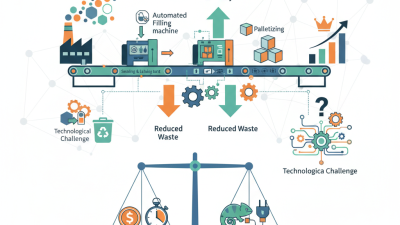
What Are Packaging Machines and How Do They Work?
Packaging machines are the quiet architecture behind modern commerce. They fill bottles, form cartons, seal pouches, label containers, and inspect every unit. Their work must be fast, repeatable, and gentle enough to protect fragile products.
The PMMI 2024 State of the Industry Report valued U.S. packaging machinery shipments at approximately $10.4 billion in 2024. Its findings also highlight labor shortages, automation, and flexible production as major industry pressures. Smithers forecasts continued growth in global packaging demand, driven by food, beverages, healthcare, and e-commerce. These figures explain why packaging machines are moving beyond simple mechanical tasks. Sensors now detect missing caps, cameras check print quality, and servo motors adjust timing within fractions of a second.
“Automation is no longer an option; it is a necessity,” says Jorge Izquierdo, Vice President of Market Development at PMMI. His statement reflects factory reality. A small packaging line may combine a conveyor, filler, heat sealer, checkweigher, and robotic case packer. Each component communicates with the next. A minor timing error can create dozens of rejected packages.
Still, technology is not a perfect answer. More automation can increase maintenance demands, training costs, and integration risks. That part is sometimes overlooked. This guide explains what packaging machines are, how their core systems work, and why machine selection requires more than comparing speed. The most reliable solution is not always the fastest one. It is the one that protects the product, supports operators, and performs consistently under real production conditions.
What Packaging Machines Are: Types, Functions, and Global Market Scale
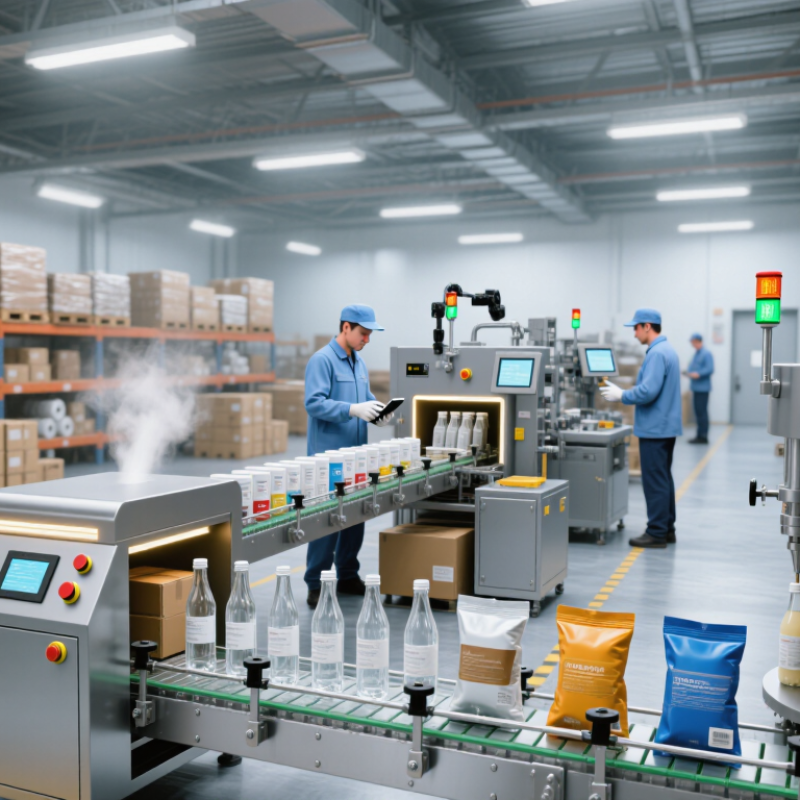
Packaging machines are engineered systems that prepare products for storage, transport, and sale. They can fill, weigh, seal, label, wrap, or inspect items with controlled speed. A typical line moves containers along a conveyor. Sensors detect position, while pumps, augers, or robotic arms perform each task. A control system adjusts timing and records basic production data. The process looks simple. It is not.
Common types include filling machines for liquids, powders, and granules. Form-fill-seal equipment creates bags from flexible film, fills them, and closes them. Cartoning machines place products into cartons, while case packers arrange finished units for shipping. Labeling and coding systems add dates, batch details, or handling information. Inspection units may check weight, seal quality, or visible defects. In real facilities, machine selection depends on product texture, package material, hygiene needs, line speed, and available floor space.
The global packaging machinery market operates at a very large scale. Recent industry estimates often place its annual value in the tens of billions of US dollars, although figures differ by product category and research method. Demand grows with food, medicine, household goods, and online retail. Automation can reduce repetitive labor and improve consistency, but it does not remove every risk. Poor calibration still causes waste. A small sensor error can stop an entire line. Operators need training, maintenance records, and practical judgment. Market forecasts also deserve caution; economic shifts and changing package designs can quickly alter projections.
Core Components: Conveyors, Sensors, PLCs, and 30–120 Packs per Minute
What Are Packaging Machines and How Do They Work?
Packaging machines coordinate movement, detection, and control. Conveyors carry empty containers, products, and sealed packs through each station. At 30–120 packs per minute, timing becomes critical. A slight product gap can create a costly jam.
Sensors detect position, fill level, film tension, and rejected packs. Photoelectric sensors watch passing containers like small electronic eyes. Load cells can check weight before sealing. The PLC receives these signals and adjusts motors, valves, and actuators within milliseconds. A clear HMI lets operators change speed, temperature, and recipe settings. PMMI’s 2024 State of the Industry report places U.S. packaging machinery shipments at approximately 10 billion dollars annually, reflecting strong investment in automated production and labor-saving equipment.
Actual output depends on product shape, package size, and changeover time. Fortune Business Insights estimated the global packaging machinery market at 52.83 billion dollars in 2023, with continued growth projected through 2032. These figures describe market capacity, not guaranteed line performance. A machine rated for 120 packs per minute may run closer to 85 during frequent inspections or delicate product handling. That gap matters. In practical line testing, sensors may detect a problem correctly, yet poor conveyor spacing still causes stoppages. Engineers should measure uptime, reject rates, and changeover minutes, not speed alone. A fast machine is not always an efficient machine.
How Packaging Works: Forming, Filling, Sealing, Coding, and Inspection
Packaging machines turn loose products into measured, protected, and traceable units. Their work follows several connected stages. Each stage depends on accurate timing, clean equipment, and suitable packaging materials.
Forming creates the pouch, tray, carton, or container shape. Flexible film may fold around a product, while rigid sheets can be heated and pressed into trays. Filling then adds a controlled amount of product. Augers handle powders, pumps move liquids, and scales measure many dry goods. Small variations still happen. Product texture, temperature, and moisture can change the result.
Sealing closes the package by applying heat, pressure, adhesive, or a combination. A weak seal can leak, while excessive heat may damage the film. Coding adds dates, batch references, or production information for traceability. The code must remain readable after handling and transport. Inspection systems check weight, seal quality, appearance, and printed data. Sensors and cameras can reject questionable packages, but they are not perfect. Dust, glare, or poor alignment may confuse a camera. Operators should verify settings, review rejected items, and record maintenance checks. In practical production, the best results come from adjusting the machine to the product, not forcing every product into one fixed setting.
Automation Technologies: Robotics, Vision Systems, and ±1% Fill Accuracy
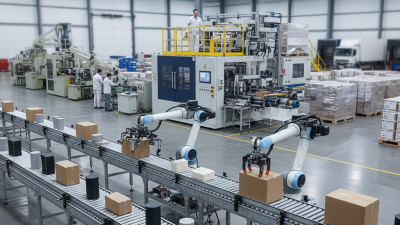
Packaging machines combine mechanical handling, sensors, software, and controlled dosing. Their purpose is simple: move products, measure them, and seal them consistently. Modern systems increasingly use robotics for picking cartons, arranging containers, and loading cases.
The International Federation of Robotics reported 541,302 industrial robots installed worldwide in 2023.
Packaging remains a practical application because robots reduce repetitive handling and maintain steady motion during long production runs.
Vision systems add another layer of control. Cameras inspect labels, caps, seals, container positions, and visible defects before products leave the line. According to the International Federation of Robotics, artificial intelligence and vision are expanding robot capabilities beyond fixed movements. A camera can detect a tilted container within milliseconds, while software can divert it without stopping production. Small errors matter.
Fill accuracy often targets ±1%, especially for liquid, powder, and granular products.
This target depends on load-cell resolution, valve timing, product density, vibration, and temperature. It is not automatic. Operators must calibrate scales, test samples, and adjust dosing during production. OIML Recommendation R 61 provides international guidance for automatic gravimetric filling instruments, supporting structured accuracy checks.
In practice, a machine may achieve ±1% under stable conditions but drift during changeovers. That uncomfortable detail deserves attention. Clean sensors, stable product flow, and well-trained technicians often matter as much as advanced software. Reliability is built through repeated measurements, not impressive specifications alone.
Safety and Performance: ISO 12100, OEE, Changeovers, and Waste Rates
Packaging machines coordinate feeding, filling, sealing, labeling, and discharge operations. Sensors monitor product position, film tension, temperature, and guarding conditions. The machine stops when a door opens or a sensor detects an unsafe state. ISO 12100 provides a practical method for identifying hazards and reducing risks through design. It encourages engineers to remove hazards before relying on warnings or operator behavior. That principle matters near heated jaws, rotating shafts, and pneumatic cutters.
Performance needs more than maximum speed. OEE measures availability, performance, and quality. A line may run at 120 packs per minute, yet lose time through brief sensor stops. Those small interruptions are easy to miss. Operators can record downtime codes, rejected packs, and actual output by shift. The result shows whether slow running or poor quality limits production. OEE is useful, but it is not a complete diagnosis. Rushed data entry can make a clean dashboard look trustworthy.
Changeovers reveal the difference between theory and the factory floor. A careful team prepares guides, film, recipes, tools, and cleaning materials before stopping the line. Clear settings reduce adjustment packs and shorten restart checks. Waste rates should include startup scrap, damaged film, underfilled packs, and rejected seals. Weighing waste at each changeover provides stronger evidence than guessing from a disposal bin. Still, low waste can hide under-inspection. Operators need sample checks, traceable records, and time to question unusual results.
What Are Packaging Machines and How Do They Work?
Packaging machines automatically fill, seal, label, wrap, or palletize products. Their performance is commonly evaluated with Overall Equipment Effectiveness (OEE), calculated as Availability × Performance × Quality. The reference values below represent widely used world-class OEE benchmarks and do not describe any individual company.
Availability reflects uptime after breakdowns and changeovers, performance measures running speed against the ideal rate, and quality measures defect-free output. A 90% availability rate, 95% performance rate, and 99.9% quality rate produce an OEE of approximately 85.4%. ISO 12100 provides a framework for machinery risk assessment and risk reduction, while shorter changeovers and lower waste generally improve availability, quality, and operating cost.