Top Plastic Packaging Solutions for Businesses Worldwide?
The demand for plastic packaging solutions continues to rise globally. Many businesses rely on these solutions to enhance product safety and improve sustainability. Leading industry expert Dr. Jennifer Hartman once said, "Innovative plastic packaging solutions can significantly reduce waste and improve efficiency." Her insights highlight the evolving nature of the industry.
Plastic packaging plays a crucial role in protecting products during transportation and storage. It is lightweight, durable, and versatile. However, the environmental impact of plastic waste remains a concern. Companies face pressure to adopt eco-friendly practices while still meeting market demands. They must navigate the balance between functionality and sustainability.
Investing in new plastic packaging solutions can bring long-term benefits. Many businesses are exploring biodegradable options and recyclable materials. These innovations can reduce environmental footprints while meeting customer expectations. The packaging industry is in a crucial phase of transformation, and businesses must adapt to stay ahead. Embracing change is vital for future growth and responsibility.
Emerging Trends in Plastic Packaging Solutions for Global Businesses
In recent years, the plastic packaging industry has seen notable advancements shaped by sustainability and innovation. According to a report by Smithers Pira, the global plastic packaging market reached a value of $350 billion in 2021 and is projected to grow annually by 4.8% through 2026. These statistics highlight the crucial role plastic packaging plays in various sectors.
Emerging trends reflect a shift toward recycled and biodegradable materials. The use of post-consumer recycled content in packaging has surged, with over 30% of packaging manufacturers integrating it into their products. Additionally, bioplastics are gaining traction, accounting for about 3% of the global polymer market in 2022. However, there is pressure to improve recycling infrastructures globally. Many regions still struggle with waste management, leading to inefficiencies and environmental concerns.
The demand for smart packaging is also rising. Innovations like QR codes and NFC technology enhance consumer engagement and track product freshness. These developments are promising, yet challenges remain. Companies must balance cost and effectiveness while adhering to consumer preferences. As the industry evolves, it’s imperative to reflect on potential pitfalls, such as over-reliance on single-use plastics. Finding solutions that marry functionality with sustainability is essential for future growth in global markets.
Top Plastic Packaging Solutions for Businesses Worldwide
This chart illustrates the market share of various plastic packaging solutions used by businesses globally. As highlighted, Flexible Packaging leads the market with a significant share, followed by Rigid and Sustainable Packaging solutions. This trend indicates the increasing preference for versatile and environmentally friendly packaging options among businesses.
Sustainable Practices in Plastic Packaging: A Business Perspective
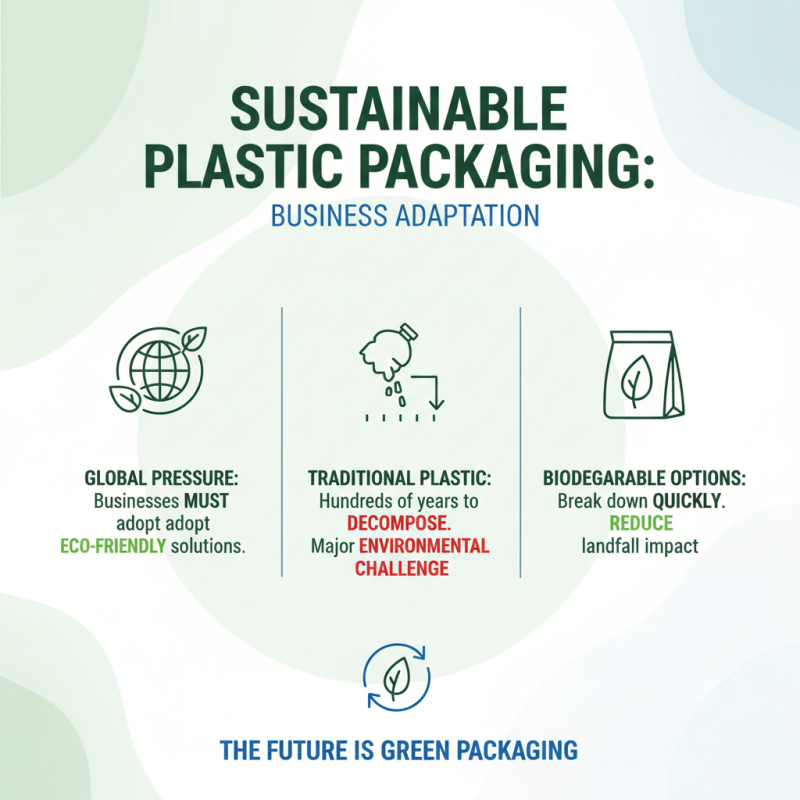
Sustainable practices in plastic packaging are becoming vital for businesses worldwide. Companies face increasing pressure to adopt eco-friendly solutions. Traditional plastic can take hundreds of years to decompose. This fact poses significant environmental challenges. Shifting towards biodegradable options is one solution. These materials break down more quickly, reducing landfill impact.
Investing in recycled content is another approach. Many businesses are opting for packaging made from post-consumer recyclables. This practice not only reduces waste but also supports the recycling industry. However, some companies struggle with sourcing reliable recycled materials. Quality can vary greatly, affecting product safety and customer trust.
Moreover, businesses must consider the entire supply chain's sustainability. Collaborating with suppliers can enhance eco-friendly practices. Yet, this partnership requires transparency and open communication. Some organizations may find it difficult to adjust to these changes. Educating employees about sustainability can be a challenge. Nonetheless, overcoming these barriers can lead to long-term benefits for the business and the planet.
Innovative Materials: Advancements in Plastic Packaging Technology
Innovative materials in plastic packaging are reshaping industries worldwide. A recent report from Smithers reveals the global market for plastic packaging will reach $1.05 trillion by 2024. This growth reflects the increasing demand for lightweight, durable, and cost-effective packaging solutions.
Biodegradable plastics and post-consumer recycled materials are at the forefront of innovation. These materials reduce environmental impact significantly. According to a study by the European Bioplastics Association, the production capacity of bioplastics is expected to increase by 63% by 2024. Businesses are exploring alternatives, but the transition still faces challenges. Many traditional plastics remain cheaper and widely available.
Additionally, advancements in smart packaging technologies are notable. Sensors and QR codes embedded in packaging improve supply chain transparency. However, integrating these technologies requires investment and expertise. Companies must weigh costs against potential benefits. The packaging landscape is evolving, but gaps in sustainability practices persist. Many firms still rely on conventional materials, raising questions about long-term viability.
Regulatory Challenges Impacting Plastic Packaging Industry Worldwide
The plastic packaging industry faces complex regulatory challenges globally. The European Union has introduced strict guidelines aimed at reducing single-use plastics. These regulations are reshaping the market landscape, pushing companies to innovate and adapt. In fact, 60% of businesses report concern over compliance costs.
Recycling initiatives also influence the industry. The Ellen MacArthur Foundation estimates that only 14% of plastic packaging is collected for recycling. This statistic highlights the gap between current practices and regulatory expectations. Efforts are being made, yet the question looms: Is it enough?
Countries are implementing various policies. Some impose taxes on plastic products, while others promote biodegradable alternatives. Data from industry reports indicates that around 30% of businesses plan to transition to eco-friendly materials by 2025. However, the pace of change remains inconsistent, raising the need for a unified global approach. To thrive, organizations must navigate these regulatory landscapes thoughtfully, balancing sustainability with operational efficiency.
Case Studies: Successful Implementation of Plastic Packaging Solutions
Plastic packaging plays a crucial role in various industries. Case studies reveal how businesses successfully adopted innovative solutions. For instance, a recent study by Smithers Pira shows that the global demand for plastic packaging is expected to reach 480 million tons by 2024. This growing demand highlights the necessity for businesses to utilize effective strategies.
One example is a beverage company that implemented eco-friendly biodegradable plastics for their packaging. This decision reduced their carbon footprint by 23%. Data from the Ellen MacArthur Foundation indicates that companies adopting sustainable practices can save up to 30% on costs in the long run. However, not all attempts at adopting new materials succeed. Some businesses struggle with supply chain integration, leading to wasted resources.
Another case involved a food manufacturer that switched to reclosable packaging. This move reduced product spoilage by 15%. Yet, challenges arose in consumer acceptance and awareness. Feedback revealed that many customers were unaware of the benefits of this new packaging. Addressing consumer education is essential for ensuring the longevity of such innovative solutions.