Top Plastic Packaging Solutions for Global Buyers

Global buyers are reassessing plastic packaging solutions as costs, climate risks, and regulatory expectations reshape supply chains. The OECD’s Global Plastics Outlook reports that global plastic waste reached 353 million tonnes in 2019, while only 9% was ultimately recycled. That gap is impossible to ignore. It also exposes a practical challenge: packaging must protect products without creating avoidable waste.

Smithers’ Future of Global Packaging to 2028 identifies sustainability, lightweighting, recycling infrastructure, and material innovation as major forces affecting packaging development. These trends matter on a warehouse floor. A thinner pouch can reduce transport weight, while a poorly designed multilayer pack may remain difficult to recycle. Small design choices create measurable consequences.

“Packaging must be designed for circularity from the beginning,” says Andrew Morlet, Chief Executive of the Ellen MacArthur Foundation. His statement reflects a growing industry standard, not a marketing slogan. Effective plastic packaging solutions should balance barrier performance, shelf life, food safety, recyclability, and regional recovery systems.

However, global buyers should question impressive claims. “Recyclable” does not always mean recyclable locally. Infrastructure varies widely between countries, cities, and even industrial zones. Supplier audits, verified material data, and clear end-of-life instructions remain essential. This overview examines practical options for international procurement, including flexible films, rigid containers, recycled-content packaging, reusable systems, and emerging bio-based materials. The best solution is rarely the newest one. It is the option that performs reliably, meets applicable requirements, and works beyond the factory gate.
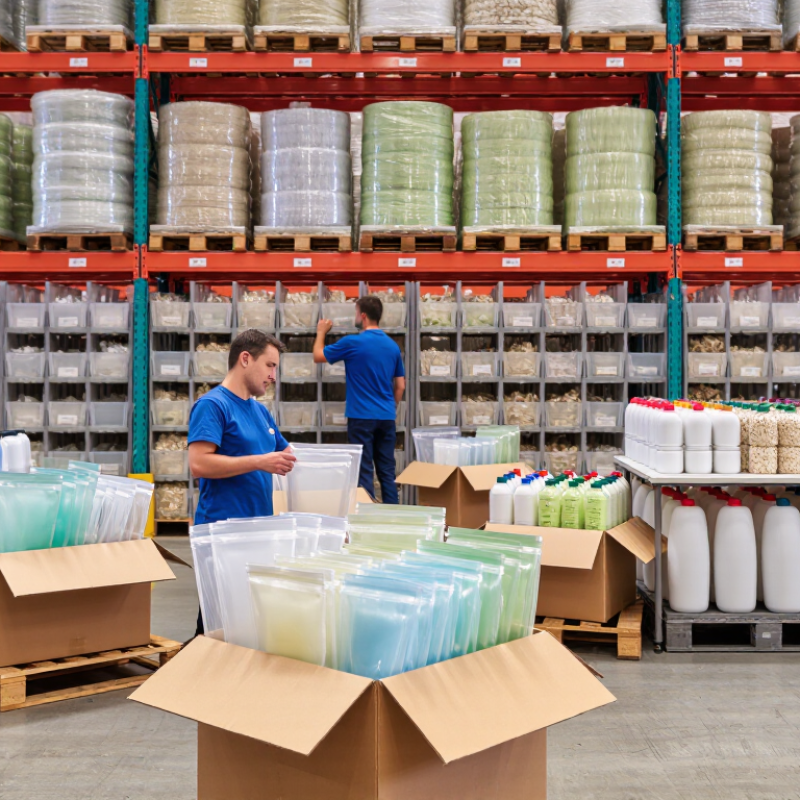
Top Plastic Packaging Solutions for Global Buyers

Understanding Plastic Packaging Types and Their Global Applications

Plastic packaging types serve different global supply chains. Rigid packaging includes bottles, jars, tubs, and protective trays. It suits beverages, food, healthcare, and household goods. Flexible packaging includes pouches, films, and wraps. It reduces shipping weight and often uses less material. However, complex multilayer films can be difficult to recycle.

The OECD Global Plastics Outlook reported that the world generated 353 million tonnes of plastic waste in 2019. Only 9% was recycled.

This data makes packaging design a practical responsibility, not a marketing detail. PlasticsEurope reported that packaging represented about 40% of European plastics demand in 2022.

Buyers should compare barrier performance, recycled content, sealing strength, and end-of-life options. A package that protects food well may still create recovery problems. No format is perfect.

Tips: Match the package to the product’s moisture, oxygen, and temperature risks. Ask suppliers for material specifications and verified test results. Check local recycling systems before choosing a film or laminate. Keep labels simple and removable. Small design decisions matter. My experience suggests that cheaper packaging can become expensive after damage, leakage, or rejected shipments. Regional conditions also matter, especially humidity, transport distance, and collection infrastructure.

Selecting Materials for Product Safety, Durability, and Sustainability

Top Plastic Packaging Solutions for Global Buyers

Selecting packaging material requires more than comparing price per kilogram. Product safety comes first. Food, cosmetics, and household products need suitable chemical resistance and controlled migration. Polyethylene and polypropylene often support moisture protection, while PET offers clarity and strong impact performance. However, every resin requires application-specific testing. A clear container can still fail under heat, pressure, or transport vibration.

Durability also depends on design. I recommend combining drop tests, seal-strength checks, and shelf-life trials before approving a supplier. Thin packaging may reduce material use, but it can increase leakage and product loss. That trade-off deserves honest review.

Global Recycling Insight
9%

The OECD Global Plastics Outlook reports that only 9% of plastic waste was recycled globally in 2019.

This figure shows why lightweighting alone is not sustainability.

Recyclability at the Design Stage

Recyclability should be considered at the design stage. Mono-material structures are generally easier to sort than mixed-material laminates, provided collection and recycling systems exist locally. The United Nations Environment Programme’s Turning off the Tap report states that plastic pollution could be reduced by 80% by 2040 through reuse, recycling, and redesign. Yet recycled content is not automatically suitable for every product. Buyers should request traceability, contamination controls, and independent test results. Sometimes, a slightly heavier package protects the contents better and creates less total waste. That possibility is easy to overlook.

Comparing Packaging Formats for Different Industries and Markets

Top Plastic Packaging Solutions for Global Buyers

Comparing Packaging Formats for Different Industries and Markets

Choosing plastic packaging begins with the product, not the factory. A clear bottle may protect shampoo, but it can weaken under strong sunlight. Thick jars suit creams and sauces that need wide openings. Flexible pouches reduce shipping weight and storage space. Small details matter. A buyer should test sealing, stacking, and drop resistance before approving large volumes. In my experience, attractive samples often hide weak corners or inconsistent wall thickness.

Food producers usually need reliable barriers against moisture, oxygen, and light. Rigid containers offer stable stacking for supermarkets, while films can support lightweight portions and refill systems. Medical and personal-care products require precise closures, clean surfaces, and clear batch information. Industrial buyers may value puncture resistance more than appearance. A container for cleaning liquid needs a secure cap and chemical compatibility. Material selection must match the formula.

Markets also change the decision. Humid regions demand stronger moisture protection and careful warehouse testing. Cold climates can make some plastics brittle during transport. Local recycling systems may accept bottles but reject complex multilayer films. That difference affects purchasing decisions and customer trust. Recycled content can support sustainability goals, but supply quality may vary. This is where plans become imperfect. A cheaper format may create higher damage rates, and a recyclable package may lack convenient collection. Buyers should compare full performance, regional requirements, and actual end-of-life options before choosing a format.

Evaluating Suppliers, Certifications, Costs, and Export Requirements

Top Plastic Packaging Solutions for Global Buyers

Choosing a plastic packaging supplier requires more than comparing unit prices. Ask for production samples, resin specifications, thickness tolerances, and closure measurements. A reliable supplier should explain its quality controls clearly. During supplier evaluations, review factory capacity, inspection records, complaint handling, and batch traceability. A clean sample does not guarantee stable mass production.

Certifications also need careful checking. ISO 9001 can indicate a structured quality system, while ISO 14001 reflects environmental management practices. For food-related packaging, request applicable food-contact declarations and migration test reports. BRCGS Packaging Materials may support buyer confidence, but certification scope and expiry dates matter. Verify documents with the issuing organization when possible. Paperwork alone is not enough.

Cost comparisons should include tooling, minimum order quantities, printing plates, inland transport, freight, duties, and storage. Ask suppliers to state Incoterms and payment conditions in writing. Export files commonly include a commercial invoice, packing list, transport document, and relevant test reports. Check the destination market’s labeling, material, recycling, and import requirements before production. HS code classification can affect customs treatment, so confirm it with a qualified trade professional. I have seen low quotations become expensive after mold changes and delayed shipments. Some assumptions remain untested until the first container arrives. Build a pilot order into the plan. That small step can reveal warping, odor, weak seals, or inconsistent color before a larger commitment.

Managing Custom Design, Production, Quality Control, and Delivery

Top Plastic Packaging Solutions for Global Buyers

Custom design should begin with use conditions, not attractive drawings. Buyers need to define product weight, filling temperature, stacking height, barrier needs, and destination climate. A thin wall may reduce material use, but it can deform inside a hot container. In practice, small design changes often affect tooling, cycle time, and freight efficiency. The OECD’s Global Plastics Outlook reports 353 million tonnes of plastic waste in 2019, with only 9% recycled. This makes material selection and recyclability evidence commercially important, not decorative claims. Small defects travel far.

Production control requires documented resin specifications, mold maintenance, and approved reference samples. Quality teams should verify dimensions, weight, sealing performance, color variation, and contamination risks. AQL sampling can support decisions, but it cannot replace process monitoring. The inspection plan should identify who pays when a batch fails. That gap is often overlooked. The World Bank’s Logistics Performance Index 2023 highlights customs, tracking, infrastructure, and delivery timeliness as core logistics factors. Packaging suppliers should connect these factors to real shipment planning, including pallet patterns, carton compression, humidity protection, and export documents. UNCTAD reports that maritime transport carries over 80% of global merchandise trade by volume, so port delays can expose weak packaging quickly. Digital inspection records, batch codes, retained samples, and pre-shipment photos improve traceability. Still, no report can predict every route disruption. Buyers should approve practical tolerances, test samples under expected conditions, and keep contingency capacity for urgent replenishment.

  • November 2025
  • 18/11 - 20/11
    Prod&Pack
    (Lyon, France)
  • 25/11 - 26/11
    Deutscher Fleisch Kongress
    (Mainz, Germany)
  • February 2026
  • 02/02 - 03/02
    Cheese Affair
    (Aarau, Switzerland)
  • 07/02 - 11/02
    Intergastra
    (Stuttgart, Germany)
  • 09/02 - 13/02
    Victus open doors event
    (Budapest, Hungary)
  • March 2026
  • 03/03 - 05/03
    Nemco Packaging Days
    (Viby, Denmark)
  • 10/03 - 12/03
    CFIA
    (Rennes, France)
  • 24/03 - 26/03
    Aquasur
    (Puerto Montt, Chile)

Default